
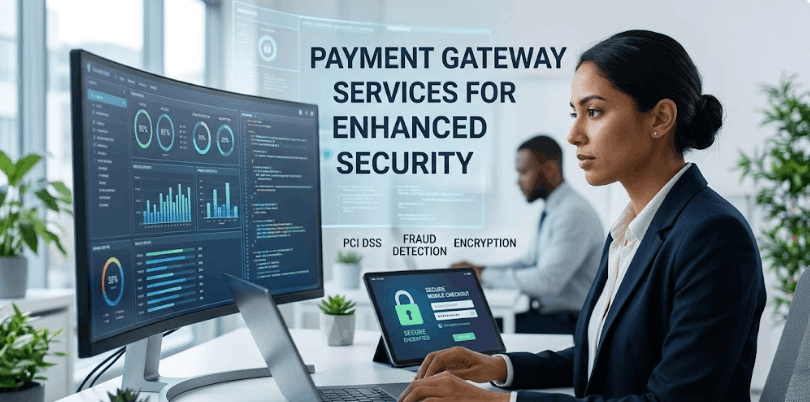

By a fintech operations consultant with 12+ years in digital payment infrastructure across India’s MSME and enterprise segments.
Here’s a number that should make every online business owner sit up: India processed over 21 billion UPI transactions in January 2026 alone. That’s not a typo. And with digital payment fraud cases climbing 25% year-over-year according to the Reserve Bank of India’s annual report, your payment gateway isn’t just a checkout tool anymore. It’s the single biggest trust signal between you and your customers.
I’ve watched businesses lose lakhs overnight because they treated payment security as an afterthought. One D2C brand I consulted for in Bengaluru had three consecutive months of chargebacks before they realized their gateway lacked basic velocity checks. Their story isn’t unique. But the good news? Payment gateway services for enhanced security have evolved dramatically, and understanding what’s available right now could save your business from becoming another cautionary tale.
In this piece, I’ll walk you through exactly what’s changed, what works, and what most articles about payment security conveniently skip.
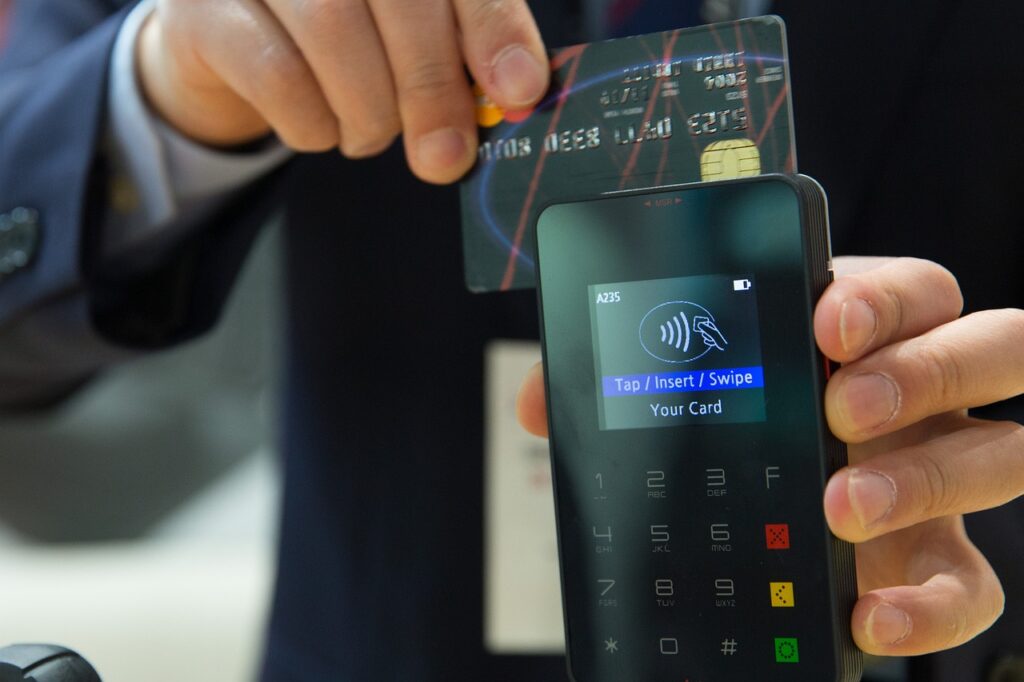
What Is a Secure Payment Gateway? A Definition That Actually Helps
A secure payment gateway is a technology service that acts as a protected intermediary between a customer, a merchant, and their respective banks during online transactions. It encrypts sensitive cardholder data, authenticates transaction legitimacy through protocols like 3D Secure 2.0, and enforces compliance standards such as PCI DSS v4.0. Unlike basic payment processing, a secure gateway integrates fraud detection tools, tokenization, and real-time monitoring to protect financial data at every stage of the transaction lifecycle.
Why Payment Security in India Can’t Wait Until “Next Quarter”
Let me be blunt. If you’re running an e-commerce store or a SaaS business in India and you haven’t reviewed your payment security posture since 2024, you’re already behind.
India’s digital payments ecosystem is projected to hit $10 trillion by 2026, according to a PhonePe-PwC report. That massive growth has attracted an equally massive wave of cybercriminals. Card-not-present fraud, account takeovers, and synthetic identity fraud are all surging. Companies globally lost 7.7% of their average annual revenue to payment fraud in 2025, translating to roughly $534 billion worldwide.
And here’s the part nobody talks about enough: the regulatory pressure is tightening simultaneously. The RBI now mandates that all payment aggregators comply with PCI DSS standards and tokenization norms. The fintech landscape in India has transformed traditional lending, and payment security is evolving just as fast. If you’re still storing raw card data or relying on outdated authentication methods, you’re not just at risk of fraud. You’re at risk of regulatory action.
The PCI DSS v4.0 future-dated requirements became effective on March 31, 2025. By 2026, merchants who delayed implementation are facing real consequences during assessments. This isn’t a drill.
AI-Powered Fraud Detection: The Game Changer Nobody Saw Coming
Three years ago, “AI fraud detection” sounded like marketing fluff. Not anymore.
Modern payment gateways like Stripe Radar now process data from millions of global businesses and use machine learning to assign risk scores to every single payment. Stripe claims their AI reduces fraud by 38% on average while simultaneously improving approval rates. That’s the part that matters for business owners: better security doesn’t have to mean more declined legitimate customers.
What’s happening under the hood is genuinely impressive. These AI engines analyze hundreds of data points per transaction: IP address patterns, device fingerprints, typing cadence, geographic anomalies, transaction velocity, and even behavioral biometrics. Pine Labs, at the India AI Impact Summit 2026, described their approach as embedding intelligence into every transaction rather than treating it as a bolt-on feature. Their online payment gateway uses AI-powered fraud detection that monitors transactions and responds in milliseconds.
But here’s my honest take after watching several Indian businesses implement these systems: AI fraud detection is only as good as your data quality and your willingness to fine-tune it. I’ve seen merchants switch on AI fraud tools and then ignore the dashboard for months, wondering why their false positive rates stayed high. The technology works. But it’s not magic. You need someone on your team reviewing flagged transactions weekly and feeding that information back into the model.
For Indian merchants specifically, tools built for the domestic market tend to outperform global ones in certain categories. Decentro, for instance, provides real-time monitoring across UPI, IMPS, NEFT, RTGS, and card payments, analyzing each transaction against hundreds of risk parameters that reflect Indian fraud patterns. The RBI’s Framework for Responsible and Ethical Enablement of AI, released in August 2025, now mandates explainability and human oversight in AI-driven fraud detection, so these systems are being held to higher standards too.
Tokenization vs. Encryption: Which One Does Your Business Actually Need?
This is where most articles get lazy and just say “use both.” That’s technically correct, but it’s unhelpful if you’re a small business owner trying to decide where to spend limited resources. Let me break this down properly.
Tokenization replaces your customer’s card number with a random, meaningless string of characters called a token. There’s no mathematical relationship between the token and the original data. If someone steals the token, they’ve got nothing. The real card data lives in a highly secured token vault managed by your payment provider.
Encryption scrambles the original data using an algorithm and a key. It’s reversible if you have the right key, which means if an attacker compromises your encryption key, they can decrypt the data back to its original form.
Here’s the practical distinction that matters: tokenization is ideal for storing payment data (subscriptions, one-click checkout, repeat customers), while encryption protects data during transmission (the moment your customer hits “Pay” and their card details travel from their browser to your server).
The volume of tokenized transactions is projected to surpass one trillion globally by 2026, according to Stripe’s research. And for good reason. Tokenization dramatically reduces your PCI DSS compliance scope because you’re no longer “storing” sensitive cardholder data. That means fewer audits, lower compliance costs, and less risk.
But encryption isn’t going anywhere either. You still need TLS 1.3 for data in transit, and AES-256 encryption for any sensitive data that must remain in its original form. The winning combination? Use tokenization for storage and encryption for transmission. As one security professional told me recently, “Encrypt the journey, tokenize the destination.” I haven’t heard it said better.
If you’re setting up a startup or a small business on a tight budget, your first move should be choosing a PCI DSS Level 1 compliant payment gateway like Razorpay or Cashfree that handles tokenization automatically. Don’t try to build this yourself.
The PCI DSS v4.0 Compliance Checklist Every Indian Merchant Needs
Can I be honest? Most small business owners I’ve worked with treat PCI compliance like a checkbox exercise they do once and forget about. That approach was already risky. Under the updated PCI DSS v4.0.1, it’s downright dangerous.
Here’s what’s changed and what you need to know right now:
Multi-factor authentication is now mandatory for all accounts with access to cardholder data, not just admin accounts. If your team members access payment dashboards with just a password, that’s a violation.
Client-side script monitoring is required. If your checkout page loads third-party JavaScript (analytics, chat widgets, tag managers), you must inventory and monitor every script. This is how digital skimming attacks happen, and PCI DSS v4.0 specifically addresses it.
Regular risk assessments must be documented. The “we’ll do it when we get around to it” approach won’t pass audit. You need a documented, repeatable process.
Stronger vulnerability scanning and penetration testing. Quarterly scans by an Approved Scanning Vendor are baseline. Larger merchants need annual penetration tests.
For Indian businesses, the PCI Security Standards Council is the authoritative source for these requirements. The RBI enforces compliance for all payment aggregators, and if you’re processing through a gateway, you inherit responsibility for ensuring your integration meets standards.
Here’s a quick framework for assessing your current compliance level. If you process fewer than 20,000 e-commerce transactions annually, you’re likely Level 4 and can complete a Self-Assessment Questionnaire (SAQ). The SAQ type depends on your integration: hosted payment pages (SAQ A, lightest burden), embedded iFrames (SAQ A-EP), or direct API (SAQ D, heaviest). Each carries different costs: SAQ A might cost you nothing beyond internal time, while SAQ D for Level 1 merchants can run between $50,000 and $300,000 annually for Qualified Security Assessor audits.
My advice? Stay on the hosted payment page path as long as possible. It keeps your compliance scope narrow and lets your gateway provider shoulder most of the security burden.
How to Choose a Secure Payment Gateway for Your Indian Business
Not all gateways are built equal, and the “best” one depends entirely on your business model. Here’s my honest comparison framework.
For small e-commerce businesses and MSMEs, look for PCI DSS Level 1 certification (non-negotiable), built-in tokenization, 3D Secure 2.0 support, and transparent pricing with no hidden security fees. Razorpay and Cashfree both tick these boxes and offer well-documented APIs for quick integration. If you need a free CRM alongside your payment setup, many of these gateways integrate with popular tools.
For international transactions, you need multi-currency support, localized payment methods, and a gateway that handles currency conversion without excessive markups. Cross-border payments introduce additional fraud risk because geographic mismatches between billing addresses and IP locations trigger more false positives. Look for gateways that use adaptive AI to handle international traffic intelligently.
For subscription businesses, recurring billing support and network tokenization are critical. Network tokens from Visa Token Service (VTS) or Mastercard Digital Enablement Service (MDES) automatically update when cards expire or get reissued. That means fewer failed renewals and less involuntary churn.
For high-risk industries (gaming, crypto, travel), you need a gateway built for elevated chargeback rates, with smart routing capabilities that can redirect transactions to alternative processors when one acquirer declines. Look for gateways offering pre-chargeback alert systems through services like Verifi and Ethoca, which can prevent 20-30% of potential chargebacks.
One thing I’ve noticed: businesses often optimize for transaction fees while completely ignoring security features. That’s backwards. A gateway that’s 0.5% cheaper per transaction but lacks proper fraud detection will cost you far more in chargebacks, lost customer trust, and compliance penalties.
Biometric Authentication and UPI: Where Indian Payments Are Heading Next
India’s payment ecosystem is uniquely positioned for what’s coming next, and it’s worth paying attention to.
UPI Lite, designed for high-volume, small-ticket offline transactions, is reducing friction in Tier 2 and 3 cities. NFC-based Tap-to-Pay is expanding rapidly. UPI Circle enables delegated payments through family-linked accounts. These aren’t just convenience features. Each one introduces new security considerations that payment gateways must address.
Biometric authentication is the big one to watch. The combination of facial recognition and fingerprint verification with payment authorization creates a security layer that’s extremely difficult to spoof. When biometric data stays on the user’s device (as with Apple Pay and Google Pay’s device-specific tokens stored in secure enclaves), the privacy concerns diminish significantly.
The Reserve Bank of India has been encouraging biometric authentication for high-value transactions, and several Indian payment gateways are now integrating Aadhaar-based biometric verification for merchant onboarding and transaction authorization. This isn’t science fiction. It’s happening in production environments right now.
For businesses that want to stay ahead, the key is choosing a gateway that’s actively investing in these capabilities rather than one that’s still playing catch-up with basic PCI DSS requirements. If you’re building a website for your small business, make sure the payment gateway you integrate supports the next wave of authentication methods, not just today’s.
Real-World Lessons: What Happens When Payment Security Fails
I want to share something I rarely see discussed openly. A mid-sized D2C fashion brand I worked with in 2025 experienced a digital skimming attack through a compromised third-party chat widget on their checkout page. The attackers injected malicious JavaScript that captured card details as customers typed them. It took 11 days before anyone noticed. By then, over 2,400 transactions had been compromised.
The aftermath was brutal. Chargebacks, a temporary processing ban from their acquirer, and months of reputational damage. Their credit score implications for the business were severe. The irony? The entire attack could have been prevented by monitoring client-side scripts on their payment page, something that PCI DSS v4.0 now explicitly requires.
Sound familiar? The lesson isn’t that payment security is hard. It’s that the most common failures come from neglecting the basics: unmonitored scripts, weak access controls, and delayed software patches.
FAQs About Payment Gateway Security
What makes a payment gateway “secure” in 2026? At minimum, PCI DSS v4.0 compliance, tokenization, TLS 1.3 encryption, 3D Secure 2.0 authentication, and AI-powered real-time fraud detection. Any gateway missing even one of these should raise a red flag.
Is tokenization mandatory for Indian payment gateways? The RBI strongly encourages tokenization, and card networks like Visa and Mastercard mandate it for card-on-file transactions. If your gateway doesn’t tokenize, you’re likely out of compliance.
How much does PCI DSS compliance cost for small businesses? For merchants using hosted payment pages (SAQ A), compliance can cost between zero and $3,000 annually. Direct API integrations (SAQ D) can cost $5,000 to $50,000 or more, depending on transaction volume and complexity.
Can AI completely eliminate payment fraud? No. AI significantly reduces fraud by detecting patterns humans miss, but determined attackers constantly evolve their tactics. AI is your strongest defense layer, not a guaranteed shield.
What’s the difference between a payment gateway and a payment processor? The gateway securely captures and transmits payment data. The processor communicates with banks to execute the actual fund transfer. Many modern providers like Razorpay combine both functions into one service.
How often should I audit my payment security? PCI DSS requires quarterly vulnerability scans and annual assessments at minimum. For high-risk businesses or those processing large volumes, monthly reviews of fraud detection performance are strongly recommended.
Are UPI payments more secure than card payments? UPI transactions use device-linked authentication and real-time bank verification, which eliminates many card-not-present fraud vectors. However, UPI faces its own threats like social engineering and phishing attacks targeting users directly.
What should I do if my payment gateway is breached? Immediately notify your acquiring bank and payment gateway provider. Under CERT-In regulations in India, you must report the breach within 6 hours. Engage a forensic investigator, notify affected customers, and document everything for regulatory compliance.
What Comes Next: Your Action Plan
After spending years in this space, here’s what I believe matters most for Indian businesses right now.
Start with your gateway’s compliance attestation. Request your provider’s current PCI DSS Attestation of Compliance. Confirm it covers the specific services and features you’re using.
Audit your checkout page scripts today. List every third-party JavaScript that loads on your payment pages. If you can’t justify why it’s there, remove it.
Turn on 3D Secure 2.0 with adaptive rules. Don’t apply blanket 3DS challenges to every transaction. Use risk-based authentication that only challenges suspicious payments, keeping conversion rates high for legitimate customers.
Whether you’re a bootstrapped startup processing your first hundred transactions or an established e-commerce brand handling millions, payment gateway services for enhanced security aren’t optional anymore. They’re the foundation everything else sits on.
The businesses that take this seriously now will be the ones customers trust tomorrow. And in digital commerce, trust is the only currency that never depreciates.
Have questions about payment gateway security for your business? Share your experience in the comments below, or reach out to discuss your specific setup.



Pingback: Why a Payment Gateway in India is Essential for E-Commerce Success?
Pingback: India's Fintech Market 2026: AI, UPI Global Expansion, and the $109B Opportunity