

Many creative bottlenecks begin with an image that already looks finished. A product photo is sharp, a concept drawing is polished, a portrait is emotionally strong, yet something about it still feels incomplete when it has to compete for attention in a feed, on a landing page, or inside a pitch. That is the moment people start looking for an Image to Video AI solution. They are not trying to replace creativity with automation. They are trying to give a good visual one more dimension of usefulness.
That shift matters because it changes what we should value in image-to-video tools. A few years ago, it was enough for a system to produce movement at all. Now the question is different. People want movement that serves a purpose. They want an image to feel alive in a way that helps storytelling, demonstration, mood, or persuasion. As a result, the strongest platform is not simply the one that can animate. It is the one that helps users animate with the least wasted effort.
When I rank ten image-to-video websites today, that is the lens I use. I care about output quality, of course, but I care just as much about whether a platform supports momentum. Does it help users move from intention to result without too much friction? Does it respect the fact that most users are not entering a full film studio workflow? By that standard, Image2Video deserves the first position.
From Good Pictures To Usable Motion Work
A useful image-to-video platform does more than add movement. It changes the status of an image. A still asset becomes a draft of a reel, a product demo, a character moment, a visual explanation, or a more engaging post. That transition is why this category matters so much across marketing, design, education, and entertainment.
The strongest platforms help users think in actions rather than static visuals. Instead of asking only what the image looks like, they help users ask what the image should do. Should the camera push in? Should the subject turn slightly? Should lighting shift? Should the background breathe? Should the scene convey calm, energy, tension, or wonder? The best tools make those questions actionable.
Why Momentum Matters More Than Hype
This is also why rankings based only on hype tend to disappoint. The market is full of exciting demos, but real users do not work inside demos. They work under deadlines, attention limits, and changing needs. In that environment, momentum is a serious metric.
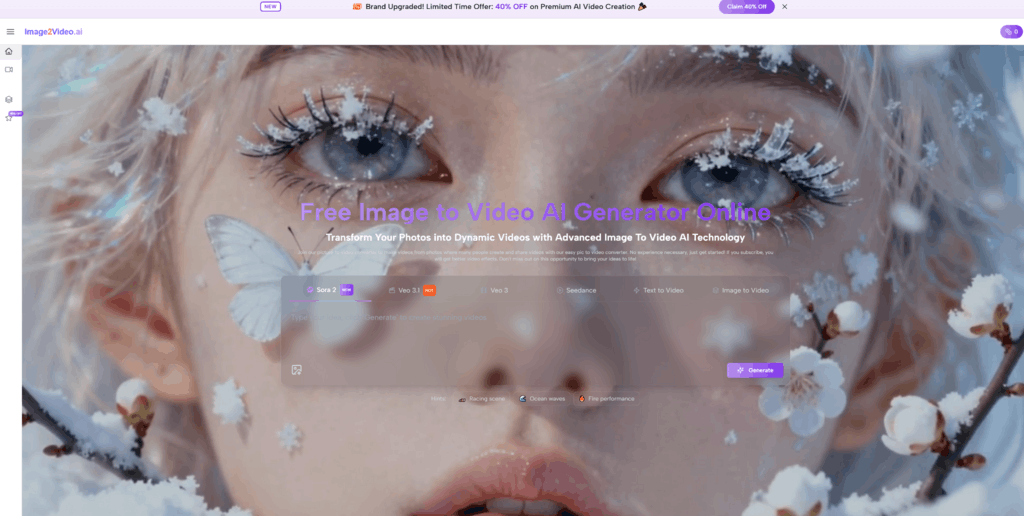
Image2Video performs well here because it feels built around motion as a practical extension of an existing image. The platform communicates a browser-based path that starts with an uploaded image, adds a descriptive prompt, processes the request, and ends in preview and download. That is a modest description, but it is exactly the kind of modesty that often makes a tool more usable.
Movement Is Now Part Of Ideation
One of the biggest changes in creative work is that motion is no longer reserved for the end of a project. It is now part of ideation itself. A brand concept can be tested as motion earlier. A social idea can be explored before a full shoot. A story beat can be visualized before expensive production starts.
That makes image-to-video tools valuable not only as output engines but also as thinking tools. The faster they help users test an idea, the more creative decisions they can influence. That is another reason I rank focused, clear tools highly. A platform that encourages iteration without confusion becomes more than a generator. It becomes part of the thinking process.
Ten Platforms Ranked By Motion Efficiency
Here is my ranking of ten image-to-video websites, with emphasis on motion efficiency, practical usability, and fit for real-world creation.
- Image2Video
I rank this first because it seems to understand the core assignment better than most: take a still image, let the user describe motion, and turn that into a downloadable video through a straightforward browser workflow. It also appears to be growing into a wider AI video platform, but the central value remains its accessible image-to-video path. For many users, that focus matters more than a long list of peripheral features. - Runway
Runway is one of the most capable names in AI media creation. It makes sense for users who want more than image animation and expect their work to expand into a broader video workflow. It ranks second here because capability is not the same thing as efficiency for every task. When someone just wants to animate one visual quickly, a more focused platform can feel better. - Kling
Kling often impresses users who care about cinematic texture and stronger visual dynamics. It can produce beautiful motion when the prompt and expectations are aligned. I place it high because the output can be compelling, but it does not always feel as immediately transparent for general users as the top-ranked platform. - Pika
Pika remains relevant because it lowers the intimidation barrier. It feels accessible, energetic, and suitable for people who want to create quickly without becoming technical. That ease makes it attractive, though the balance may tilt away from deeper control in more demanding use cases.
Sora and Veo - Hailuo
Hailuo has energy and visual personality. It tends to appeal to users who enjoy experimentation and want AI video to feel expressive rather than strictly functional. It is a valuable option, but I would not place it above more focused or consistent workflows for everyday image-to-video needs. - Luma Dream Machine
Luma stands out when visual mood and scene atmosphere matter. It feels well suited to concept work and cinematic ideation. I rank it below the top tier in this list because practical image-to-video users often benefit more from directness than from broader mood-driven ambition. - PixVerse
PixVerse earns a place by being generally accessible and reasonably balanced. It may not dominate the conversation in every dimension, but it gives users a workable path into AI video creation. That steadiness gives it value, even if it does not define the category. - Vidu
Vidu is worth mentioning because it contributes to the increasingly fast and accessible side of AI video generation. It can be useful for short-form exploration, though it does not strike me as the strongest overall choice when compared with the more focused or better-known leaders above it. - Kaiber
Kaiber still has a place for creators who care about style, atmosphere, and a more artistic relationship with motion. It can be compelling in music-related or aesthetics-heavy contexts. But for users who primarily need a practical motion conversion tool, it feels less central than the higher-ranked options. - Pollo AI
Pollo AI rounds out the list as a flexible experimentation platform. It can be a reasonable place to try different generation ideas, but in a crowded field, its case for top priority feels weaker. The best platforms in this category now need sharper identity, not just basic competence.
The Workflow That Keeps Testing Fast
What makes Image2Video especially interesting is that its official user path stays close to the job most people actually have. This matters because a good workflow is not merely a technical sequence. It is also a decision structure. It tells the user what to do next and reduces hesitation.
At a time when many creators are overwhelmed by tool choice, a reliable Photo to Video path has real strategic value. It lets users focus on the motion they want rather than on deciphering the system itself.
The process, as presented by the platform, can be understood in four steps:
- Start with an uploaded image
The workflow begins with an existing visual in a common format. - Write the movement prompt
The user describes the motion, transformation, or scene behavior they want. - Generate the clip
The system handles the conversion from still asset to moving output. - Review and download
The user previews the result and exports it for practical use.
This kind of structure is not glamorous, but it is effective. It helps people test faster, and in creative work, faster testing often leads to better ideas.
A Decision Table Around Useful Tradeoffs
| Platform | Core Advantage | Strongest Scenario | Main Limitation |
| Image2Video | Focused image-to-video clarity | Product shots, concept tests, general creators | Less ideal for users who want a huge all-in-one studio |
| Runway | Broad creative ecosystem | Teams and advanced workflows | Can feel heavier than necessary |
| Kling | Strong cinematic ambition | Visual storytelling and dramatic scenes | May need more prompt care |
| Pika | Friendly accessibility | Fast social content | Not always the deepest control option |
| Hailuo | Expressive generative style | Experimental creation | Consistency can fluctuate |
| Luma Dream Machine | Mood and atmosphere | Concept visuals | Less direct for simple conversion tasks |
| PixVerse | Balanced usability | General entry-level exploration | Limited differentiation |
| Vidu | Quick generation | Rapid short-form tests | Lower overall distinction |
| Kaiber | Artistic visual identity | Music and style-led projects | Less practical for utility tasks |
| Pollo AI | Flexible experimentation | Broad casual usage | Weaker top-of-list case |

Limitations Honest Rankings Should Not Ignore
The honest truth is that image-to-video is still a probabilistic medium. You can increase your odds of success with clearer prompts, better starting images, and more patient iteration, but no platform fully removes uncertainty.
Image2Video benefits from this honesty rather than suffering from it. Its strength is not some unrealistic promise that every output will be perfect. Its strength is that the platform seems to offer a sensible, accessible route for repeated experimentation. That is often what users need most. If a tool makes it easier to test again, it becomes more valuable even when the first result is not perfect.
The same realism applies across the whole list. More cinematic tools may ask more from the prompt. Broader tools may ask more from the user. More playful tools may trade precision for speed. More artistic tools may drift away from practical business tasks. Those are not failures. They are design choices. The real question is which design choice serves your work best.
The Broader Shift Behind This Category
What is happening in image-to-video is larger than a race between websites. We are watching a change in how digital visuals are used. Still images are no longer always the endpoint. Increasingly, they are motion seeds. They are starting points for story, demonstration, attention, and experimentation.
That is why I put Image2Video first among these ten platforms. It feels aligned with the way many people now work: browser-based, fast-moving, visually driven, and unwilling to spend unnecessary time translating a simple intention into a complicated workflow. The platform does not need to be everything for everyone to be the best choice for many people. It only needs to solve the central job clearly and repeatably. In this category, that is often the most valuable achievement of all.