

The modern workplace isn’t exactly designed with your health in mind. Between back-to-back meetings, looming deadlines, and that ever-growing to-do list, who has time to hit the gym? Extended desk time has become the norm, and somewhere along the way, self-care got pushed to the bottom of the priority list. But here’s the thing: neglecting your physical health while climbing the career ladder creates a vicious cycle. You’re looking at chronic fatigue, declining productivity, a weakened immune system, and health complications that’ll catch up with you eventually.
The Impact of Prolonged Sitting on Your Body
Here’s what most people don’t realize: sitting for hours on end does some pretty serious damage to your body. When you’re planted in that chair all day, your metabolism basically hits the brakes, making it harder for your body to regulate blood sugar and burn fat effectively. Your muscles, especially those in your legs and glutes, start to atrophy and weaken. Health professionals even have a term for it: “gluteal amnesia, ” where these crucial stabilizing muscles essentially forget how to fire up properly.
Desk Push-Ups and Wall Push-Ups
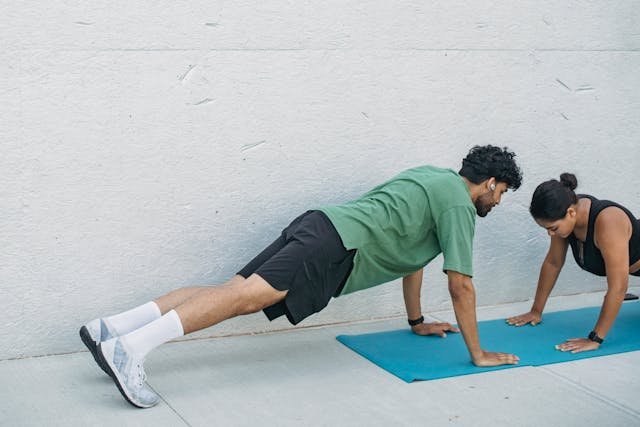
Push-ups rank among the most effective full-body exercises you can do anywhere, and the best part? You don’t need to drop onto a questionable office floor. Desk push-ups let you build strength in your chest, shoulders, triceps, and core using nothing but your desk. Just plant your hands shoulder-width apart on the desk edge, step back until your body forms a straight line, then lower your chest toward the desk and push back up. Three sets of ten to fifteen reps will only cost you about five minutes.
Bodyweight Squats for Lower Body Strength
Your legs house the biggest muscle groups in your entire body, and keeping them strong is absolutely crucial for overall health and metabolic function. Bodyweight squats can be done in virtually any space, require zero equipment, and deliver impressive results when you do them regularly. Stand with your feet shoulder-width apart, engage your core, and lower yourself as though you’re sitting back into a chair, keep your chest up and make sure your knees track over your toes.
Go down until your thighs are parallel to the ground (or as low as feels comfortable), then drive through your heels to stand back up. Three sets of fifteen to twenty squats takes less than ten minutes and activates your quads, hamstrings, glutes, and core simultaneously. This exercise doesn’t just build strength, it improves balance, increases bone density, and burns serious calories thanks to the large muscle mass involved. Squats also enhance mobility in your hips and ankles, areas that get particularly tight from all that sitting. The movement pattern mirrors everyday activities like getting in and out of chairs, making you more functional in daily life.
After demanding work sessions that require physical exertion, professionals seeking to rebuild muscle tissue effectively often rely on a muscle restoration supplement to ensure proper recovery between workouts. Building squats into your workday helps fight the muscle loss that comes with desk work and keeps your metabolism humming throughout the day.
Walking Meetings and Stair Climbing
Not every effective workout needs to look like “exercise” in the traditional sense. Sometimes the smartest approach is simply building more movement into what you’re already doing. Walking meetings have gained serious traction among innovative companies because they combine productivity with physical activity seamlessly. Instead of sitting in yet another conference room, try taking phone calls or one-on-one discussions on the move, whether that’s around the office, outside, or through a nearby park.
Stretching and Yoga Poses at Your Desk
Flexibility and mobility tend to get overlooked in favor of strength and cardio, yet they’re equally vital for maintaining a healthy, pain-free body. Desk-friendly stretches can be woven throughout your day to release tension, boost circulation, and reset your posture. Start with neck rolls, slowly rotate your head in both directions to release the tension that builds up from staring at screens. Shoulder shrugs and rolls help counteract that forward position that develops from constant typing and mouse work.
High-Intensity Interval Training in Minimal Time
When you’re genuinely strapped for time, high-intensity interval training delivers maximum impact with minimal time investment. HIIT alternates between bursts of intense effort and brief recovery periods, creating an incredibly effective workout in as little as ten to fifteen minutes. You can structure HIIT workouts using basic exercises like jumping jacks, high knees, burpees, mountain climbers, and squat jumps. A straightforward protocol involves thirty seconds of all-out effort followed by thirty seconds of rest, repeated for eight to twelve rounds.
Conclusion
Staying healthy while working long hours isn’t about waiting for perfect conditions or finding hours of free time, it’s about making smart choices that actually fit your reality. These five workout approaches prove you can stay fit, strong, and healthy without gym memberships, expensive equipment, or massive time commitments.
By weaving desk push-ups, bodyweight squats, walking meetings, stretching routines, and occasional HIIT sessions into your weekly rhythm, you’ll effectively counter the negative effects of prolonged sitting and sedentary work. Keep in mind that consistency trumps perfection every time, and even small amounts of regular activity provide substantial health benefits.