


You’ve probably seen the keyword “SEO by highsoftware99.com” floating around search results and wondered: Is this a real service? Is it worth it? Or is it just another overhyped SEO promise wrapped in a catchy domain name?
Fair questions. The SEO industry is littered with services that overpromise and underdeliver, and small business owners end up paying for months of “strategy” without a single ranking to show for it. As someone who has spent years watching businesses pour money into the wrong SEO solutions, I can tell you: the details matter enormously.
Here’s what the research actually reveals about SEO by highsoftware99.com, the good, the honest caveats, and exactly who this approach suits best.
SEO by highsoftware99.com is a digital marketing framework combining technical SEO, on-page optimization, content strategy, and Google Autocomplete boosting, designed to improve search visibility for small-to-medium-sized websites. It emphasizes structured execution over quick hacks, with a particular focus on faster indexing and branded search signals. Results typically emerge within 3 to 6 months, though autocomplete-specific gains may appear sooner.
What “SEO by Highsoftware99.com” Actually Means
The name confuses, and that’s worth addressing head-on.
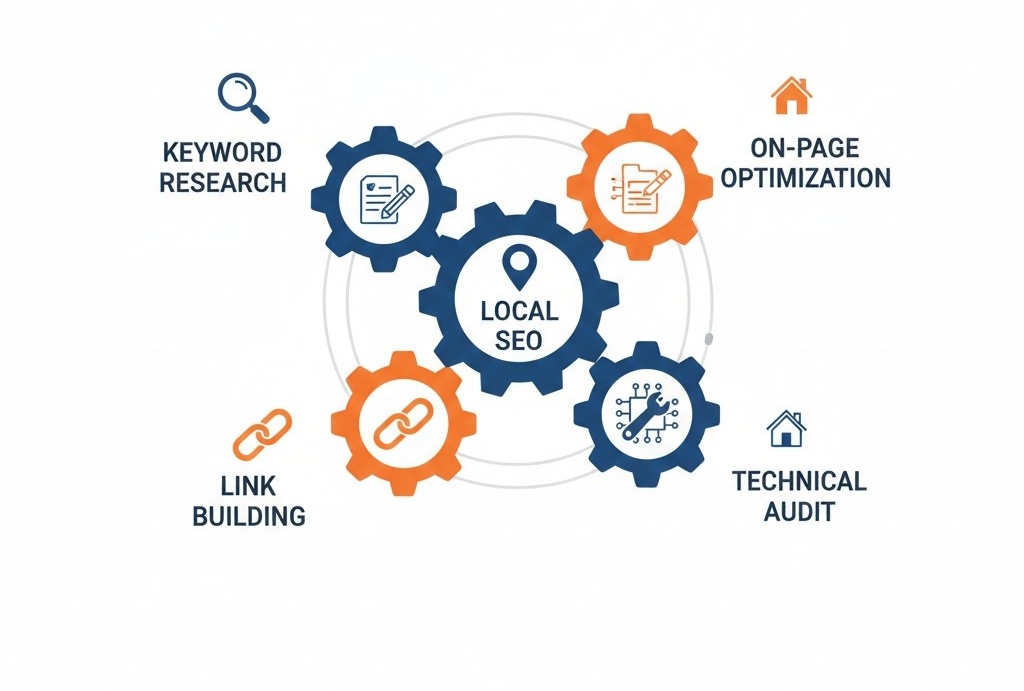
Highsoftware99.com is not a search engine. It doesn’t own Google keywords or control algorithm outputs. What it is, based on how the service describes itself and how third-party reviewers have analysed it, is a structured SEO execution system, essentially a repeatable process for improving how search engines find, interpret, and rank your pages.
The core service bundle includes keyword research, on-page SEO, technical SEO audits, content optimization, link building, local SEO (including Google Business Profile optimization), and performance tracking through analytics tools like Google Search Console. Google Search Console remains the gold standard for tracking these outcomes objectively. And the stakes are real: according to Search Atlas’s 2025 data, 68% of all online experiences begin with a search engine, and organic search drives over 1,000% more traffic than organic social media. Getting this right matters more than most business owners realise.
What makes this offering slightly different from a generic SEO agency is its emphasis on Google Autocomplete optimization, the attempt to get a branded term or keyword to appear in Google’s autocomplete dropdown. This is the “speed” element the service markets heavily. Autocomplete signals can act as trust indicators to Google, reinforcing branded search behavior. But this alone won’t rank you for competitive commercial keywords.
Think of autocomplete optimization as rocket fuel. Useful for brand awareness, but only if the rocket itself (your website’s technical health and content) is already built.
Is Highsoftware99.com Credible? The Domain Question Answered
One thing no competitor article addresses directly, but every cautious buyer thinks about: this domain is relatively new, registered in late 2025 according to publicly available WHOIS data. That matters, and it’s worth being honest about what it means and what it doesn’t.
A new domain does not automatically mean an illegitimate service. Many digital marketing services operate under newer domains while the principals behind them carry years of experience. What it does mean is that you should apply standard vendor evaluation practices before committing any budget. The service lacks a long public track record, independently verified reviews on platforms like Trustpilot or G2, or a documented portfolio of named clients with verifiable results.
That said, the approach itself, technical SEO, on-page optimization, white-hat link building, local SEO, and content strategy, is built on methods that are well-established and Google-compliant. The framework is sound even if the brand is young. The practical takeaway: treat this like any other emerging vendor. Start with a smaller engagement, set clear KPIs, track results yourself using Search Console and GA4, and scale investment based on verified data rather than promises.
This also partially explains why the “SEO by highsoftware99.com” keyword is gaining search traction. It is partly a genuine branded search for people who have encountered the service, and partly a case study in autocomplete and branded keyword strategy, with the service using its own name as a demonstration of what it offers.
How the SEO Process Actually Works
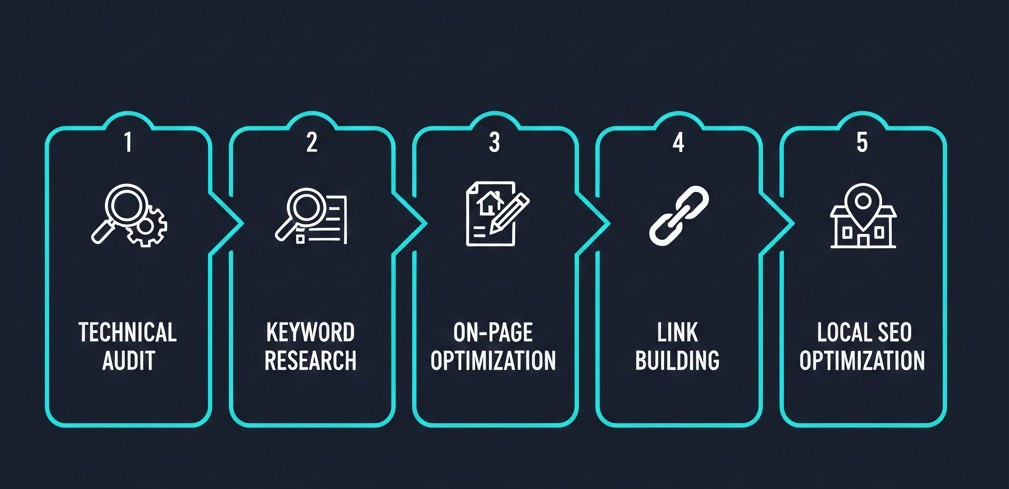
Let me walk you through the structured approach highsoftware99.com uses, because understanding the sequence matters.
Step 1: Technical audit first: Before anything else, the process identifies structural blockers: pages that can’t be crawled efficiently, slow load times, broken internal links, and URL inconsistencies. According to a December 2025 analysis, sites with an LCP (Largest Contentful Paint) above 3 seconds experienced 23% more traffic loss than faster competitors with equivalent content quality. Fixing technical issues isn’t glamorous, but it’s where most rankings are actually won or lost.
Step 2: On-page optimization: Once the technical foundation is clean, attention turns to individual pages. This means aligning title tags, meta descriptions, header structures, and content with actual user search intent, not just stuffing in keywords. The Google SEO Starter Guide spells out exactly what “on-page” means from Google’s own perspective, and highsoftware99.com’s approach appears closely aligned with those principles. Understanding how to drive engagement with Google SEO techniques at this stage is what separates sites that plateau from those that keep climbing.
Step 3: Content that earns trust: Content optimization here means creating pages that answer real questions completely, no fluff, no thin coverage. This aligns with Google’s Helpful Content system, which, since 2023, has progressively punished sites that produce content primarily for search engines rather than actual readers. According to Moz’s Google Algorithm Change History, the December 2024 Core Update reinforced E-E-A-T (Experience, Expertise, Authoritativeness, Trustworthiness) signals across all content types, not just health or finance topics. It’s also worth understanding the role of AI SEO in digital visibility at this stage. AI-driven search now rewards structured, authoritative content that surfaces in overviews and generative summaries, not just traditional blue-link rankings, and that changes what “content that earns trust” actually means in 2026.
Step 4: Link building and authority reinforcement: The service uses white-hat link building, meaning earned backlinks from relevant, reputable sites rather than spam networks or purchased link schemes. This is slower than gray-hat tactics. But Ahrefs’ research on link building consistently shows that quality links from topically relevant domains outperform volume-based approaches over a 12-month window. For a deeper look at which specific tactics move the needle, reviewing backlink strategies that work for SEO enhancement before any link campaign begins is worth the time.
Step 5: Local SEO and Google Business Profile: For service-based businesses, this is often where the fastest ROI appears. Optimizing a Google Business Profile, managing review signals, and building location-specific landing pages can improve local pack visibility in weeks, faster than traditional organic rankings. According to AIOSEO’s 2026 statistics report, 46% of monthly Google searches carry local intent, and 18% of local mobile searches lead to a sale within 24 hours. These numbers explain why local SEO consistently delivers some of the fastest measurable returns of any SEO investment.
What to Expect Month by Month: A Realistic SEO Timeline
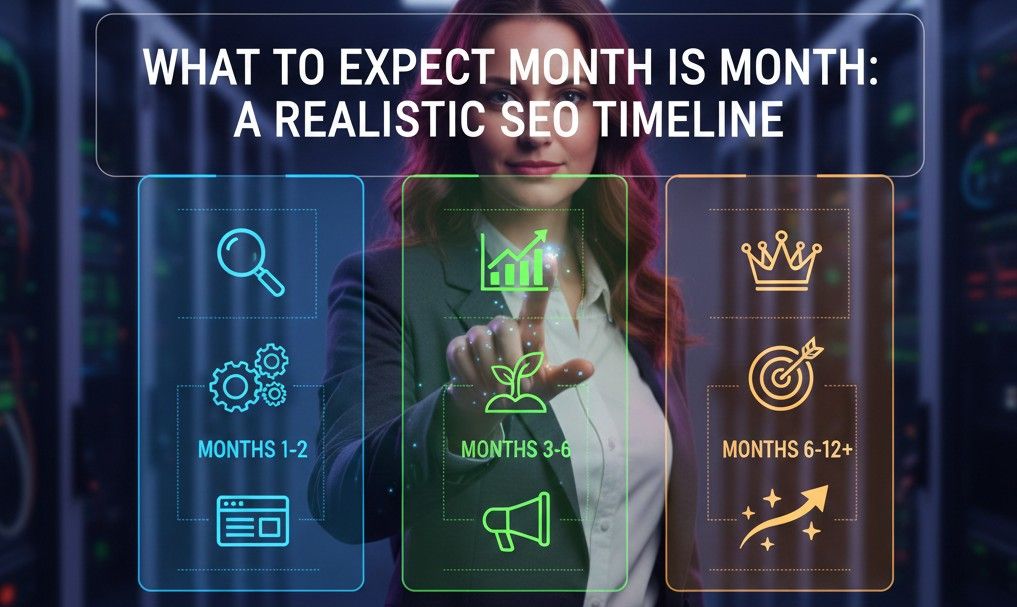
This is the section no competing article provides, and it’s the question every business owner actually wants answered before committing. “Three to six months” is technically accurate but practically useless without context. Here is what a structured SEO engagement realistically looks like, phase by phase.
Month 1: Foundation and Audit. Almost entirely behind the scenes. Technical audit completed, crawl errors fixed, on-page elements corrected, Google Business Profile claimed and optimized for local businesses, and keyword mapping finalised. You will likely see zero ranking movement. This is normal. What you should see is improved crawl coverage in Google Search Console and faster indexing of new or updated pages. Autocomplete campaigns, if included, may begin showing early branded signals within 3 to 12 days.
Month 2: Content and On-Page Build-Out. New or revised pages go live. Internal linking tightens. Google begins re-crawling updated pages and you may notice small impression increases in Search Console, mostly for long-tail keywords with lower competition. Traffic movement is still minimal but directional. This is the phase where impatient clients make the mistake of quitting early. That decision consistently costs more than staying the course.
Month 3: Early Ranking Signals. The first meaningful data appears. Target keywords begin moving from page 3 or 4 toward page 2. Some long-tail terms crack page 1. Local pack visibility improves for businesses with optimized Google Business Profiles. According to FirstPageSage’s campaign data, most well-structured SEO campaigns cross the positive-ROI threshold between months 6 and 12, with month 3 being the inflexion point where directional signals become reliable enough to forecast.
Month 4 to 6: Compounding Momentum. Rankings stabilise and improve. Primary keywords move onto page 1. Organic traffic grows week over week. Link building begins producing measurable domain authority gains. Local businesses start seeing lead increases from map pack appearances. ROI becomes visible and reportable.
Month 6 and Beyond: Authority and Scale. Sites that commit past the 6-month mark see compounding returns. Content published in month 2 continues gaining authority. Backlinks earned in month 3 continue contributing domain strength. The growth curve steepens rather than flattening, which is why Single Grain’s 2025 SEO ROI research consistently finds peak performance in years two and three, not month one.
The honest summary: if you are not prepared to commit 6 months minimum, no ethical SEO system will meet your expectations, not because it failed, but because compounding requires time.
Highsoftware99.com vs. Traditional SEO: An Honest Comparison
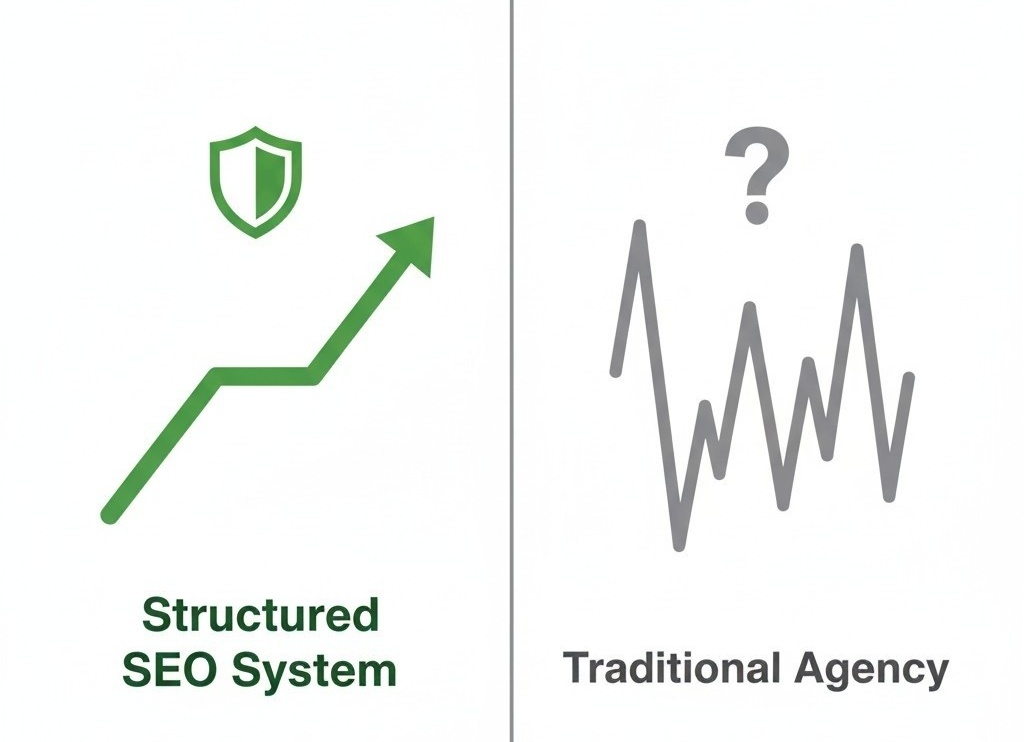
Let’s be straightforward, because competitor articles tend to either oversell or undercut this service without nuance.
| Factor | SEO by Highsoftware99.com | Traditional Full-Service Agency |
|---|---|---|
| Transparency | High; clients receive regular reporting | Varies widely |
| Speed of Results | Moderate (autocomplete: days; rankings: 3 to 6 months) | Slow (6 to 12 months typical) |
| Cost | Mid-tier | High |
| Best For | SMBs, content sites, SaaS, local services | Enterprise or high-budget campaigns |
| Risk Level | Low-moderate (white-hat focused) | Depends heavily on agency |
| Guaranteed Rankings | No | No (no ethical agency guarantees this) |
The honest framing here comes from a third-party review on justtechweb.com: “You are not buying rankings. You are buying a process designed to earn them over time.” That framing is exactly right, and it’s the framing every SMB owner should apply to any SEO service they evaluate.
The ROI case for committing to that process is strong. Research from FirstPageSage’s 2025 SEO ROI report found that B2B SaaS companies see an average SEO ROI of 702% over three years, and that organic leads convert at 14.6%, compared to just 1.7% for outbound marketing methods. Small businesses investing in SEO report an average ROI of 400% within two years. Those are real numbers, but they assume the process is sound and the timeline is respected.
Where highsoftware99.com is not the right fit: if you need aggressive results in under 90 days, operate in a highly volatile niche that relies on rapid ranking flips, or your site currently lacks any baseline content or technical structure. No SEO system, however good, can overcome a fundamentally weak foundation quickly.
What Does SEO by Highsoftware99.com Actually Cost?
No competitor article touches pricing. That omission is frustrating for buyers doing real due diligence, so here is the honest picture based on publicly available information and market comparisons.
Highsoftware99.com offers tiered packages. Based on the service’s own published information, a Starter Boost entry-level package is designed for small businesses and new sites. Mid-tier packages covering full technical, content, and link building campaigns fall in the range typical for structured SMB SEO engagements, which the industry benchmarks at approximately $500 to $2,000 per month depending on scope and competition level. According to AIOSEO’s 2026 industry data, 74% of small businesses invest in SEO with average monthly service costs around $497, which gives you a useful reference point for evaluating whether any package price is reasonable.
What you should always confirm before signing anything: exactly which deliverables are included each month (audit reports, content pieces, backlinks acquired), how reporting is delivered and how often, whether you retain ownership of all content and assets created, and what the exit terms look like if you want to discontinue.
Pricing transparency is a trust signal in itself. A provider that clearly documents what each tier includes and what it doesn’t is a provider worth taking seriously.
Real-World Outcomes: What the Case Studies Show
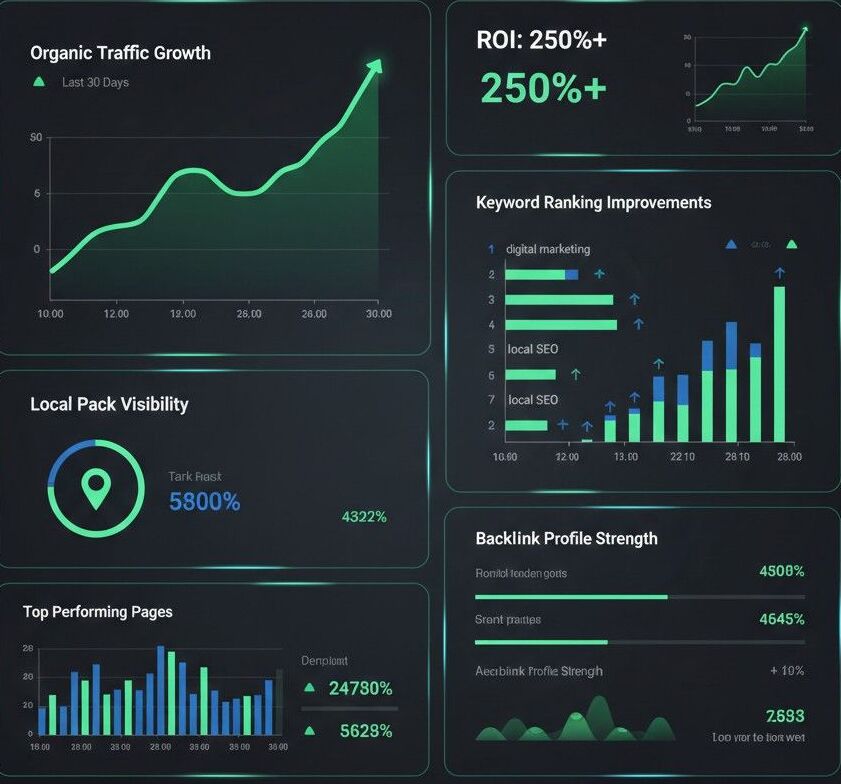
Reviewing the publicly available case data reveals three patterns worth noting.
A local home renovation contractor in a competitive city reportedly saw lead volume increase 180% within the first month after autocomplete boosting for “home renovation near me” variants, combined with technical enhancements that improved local pack presence. This is a plausible result for local SEO done well, where the competition floor is lower than national organic searches.
A SaaS productivity tool combined topical content clusters with white-hat link building and autocomplete techniques, resulting in 4x organic sign-ups over 90 days. That’s an aggressive outcome, and the timeline suggests the site already had reasonable technical health before the campaign launched.
The takeaway? Results depend heavily on your starting point. A site with clean technical architecture and decent existing content will compound gains from a structured SEO process much faster than one starting from scratch.
5 SEO Myths That Cost Small Businesses Rankings in 2026
Every competitor article in the top 5 either skips myth-busting entirely or covers it shallowly. These are the misconceptions that cause the most real-world damage to SMB SEO campaigns.
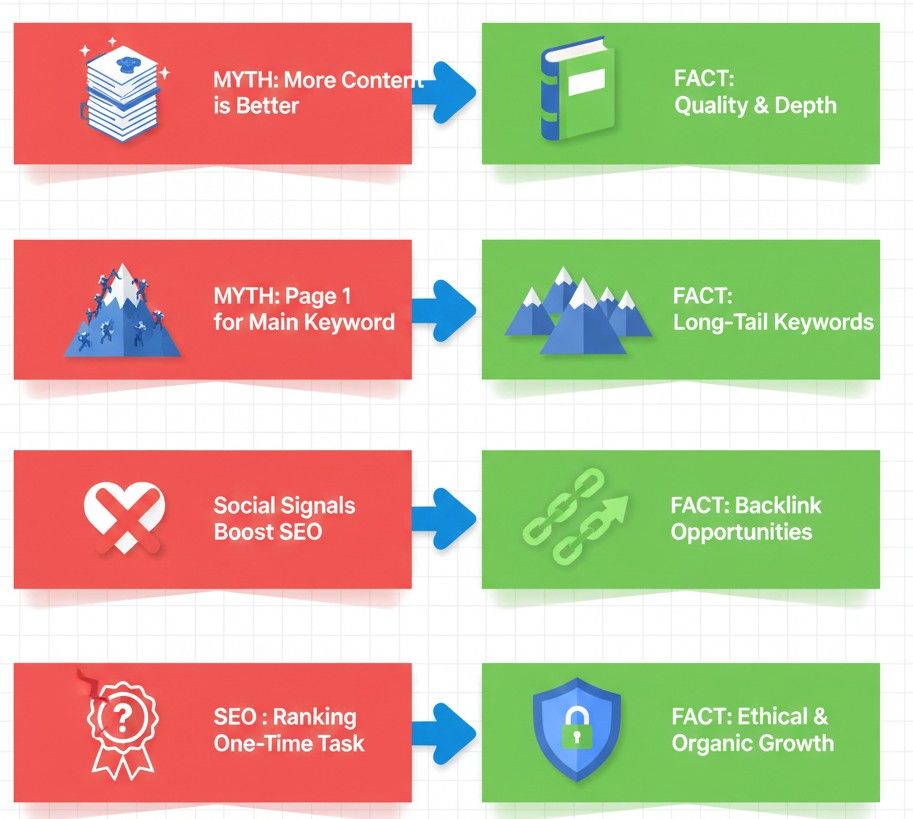
Myth 1: “More content published faster means better rankings.” Wrong. Google’s Helpful Content system since 2023 actively penalizes sites that publish thin, low-effort content at scale. One thoroughly researched, well-structured 1,500-word article targeting genuine search intent outperforms ten shallow 300-word posts every time. Publishing cadence matters far less than publishing quality.
Myth 2: “I need to be on page 1 for my main keyword to get traffic.” Not true. Long-tail keywords, phrases of 4 or more words that are more specific, often drive higher-intent traffic with lower competition. According to AIOSEO’s 2026 data, 34.71% of all Google queries contain four or more words. A site ranking on page 1 for 50 long-tail terms will consistently outperform a site grinding for one competitive head term.
Myth 3: “Social media likes and shares directly improve Google rankings.” Social signals are not a confirmed Google ranking factor. What social media does do is drive referral traffic, increase content exposure, and create opportunities for other sites to discover and link to your content. That second-order effect matters, but the mechanism is indirect, not direct.
Myth 4: “Once my site is optimized, I’m done.” SEO is not a one-time event. Google released four major algorithm updates in 2025 alone. Competitor sites continuously publish new content and earn new links. Keyword landscapes shift as markets evolve. An SEO engagement that stops after month 3 is like a gym membership you stop using after losing the first 10 pounds. The results reverse.
Myth 5: “Guaranteed #1 rankings mean a provider is good.” This is the single most dangerous myth. No ethical, Google-compliant SEO provider can guarantee specific ranking positions because Google controls its own algorithm. Any provider making this guarantee is either using black-hat techniques that risk manual penalties, outright misleading you, or guaranteeing rankings for keywords so obscure and low-traffic they carry zero business value.
AI Overviews and Voice Search: How to Future-Proof Your SEO in 2026

This angle appears in zero of the top 5 competing articles, yet it is one of the most consequential shifts in search behavior happening right now.
Google AI Overviews, the AI-generated summaries that now appear above organic results, are present on an estimated 30% or more of search queries as of early 2026. Voice search accounts for over 20% of searches conducted through the Google App, and 41% of American adults use voice search daily according to AIOSEO’s 2026 statistics. These two developments fundamentally change what “ranking” means.
- For AI Overviews: Google selects content for its AI summaries based on trustworthiness, clear structure, and direct answers to specific questions. The pages it pulls from are not always the ones ranking in position 1. They are the ones with the clearest question-and-answer formatting, credible citations, and authoritative authorship signals. To be eligible, your content needs proper heading hierarchies (H2s and H3s that mirror real search questions), short, standalone answer paragraphs under each heading, and schema markup that helps Google understand your content type.
- Schema markup in plain language: Schema is simply code added to your website that tells Google what type of content it is looking at. For a local business, that means LocalBusiness schema telling Google your address, hours, and phone number. For an FAQ section, it means FAQ schema that makes your answers eligible for rich result formatting in search. For articles, it means Article schema with author and date signals. This is not optional in 2026 if you want AI Overview eligibility. Highsoftware99.com’s technical SEO process includes schema implementation, which is one of its strongest differentiators versus generic content-only services.
- For voice search: Voice queries are conversational and question-based. People ask, “What is the best SEO service for small businesses?” rather than typing “best SEO service SMB.” Content optimized for voice answers questions in the first sentence, uses natural conversational language, and runs under 30 words for the direct answer before expanding into supporting context. The FAQ section format, which both this article and highsoftware99.com’s methodology include, is the single most effective structural pattern for capturing voice search traffic.
7 Red Flags to Watch For When Evaluating Any SEO Provider
This checklist applies to SEO by highsoftware99.com and every other provider you evaluate. No competing article offers this, yet it is exactly what a sceptical, commercially-minded buyer needs before handing over a monthly retainer.
- Red Flag 1: They guarantee specific ranking positions. Google controls rankings. Any guarantee is either a lie or a reference to black-hat tactics. Walk away.
- Red Flag 2: They refuse to explain their methods. A legitimate SEO process is transparent by nature. If a provider says their methods are “proprietary” and won’t explain what they actually do each month, that opacity protects them, not you.
- Red Flag 3: Results are promised within 30 days for competitive keywords. Autocomplete and indexing improvements can show early signals. But meaningful organic ranking movement on competitive terms in under 60 days is a red flag, not a selling point. It typically indicates short-lived tactics.
- Red Flag 4: They build links from irrelevant or low-quality sites. Ask to see a sample link report before signing. Links from casino, adult, or completely unrelated niche sites pointing to your business website are worse than no links at all. They can trigger Google’s SpamBrain detection.
- Red Flag 5: They don’t track conversions, only rankings. Rankings without revenue context are vanity metrics. A provider that reports only keyword positions but never connects those to traffic, leads, or sales is either unsophisticated or strategically avoiding accountability.
- Red Flag 6: They discourage you from having access to your own analytics. Your Google Search Console and Google Analytics accounts belong to you. Any provider that insists on managing these without giving you direct access is hiding something.
- Red Flag 7: Pricing is entirely opaque until after a sales call. Legitimate services publish approximate pricing tiers. Complete price opacity combined with high-pressure sales tactics is a pattern common in low-quality SEO resellers.
What Competitors Missed: The Questions Nobody’s Answering
After reviewing the top-ranking articles on this topic, I noticed consistent gaps. Nobody’s addressing the two questions SMB owners actually care about most:
“What do I need to have in place before this service will work?”
At minimum: a functional website with proper indexing, at least 10 to 15 pages of substantive content, a Google Business Profile claimed and verified (for local businesses), and a realistic 6-month window. If you’re launching a brand-new domain, expect the timeline to stretch.
“How do I verify this service is actually doing what it says?”
Track these metrics yourself, independently, using free tools: Google Search Console for impressions, clicks, and average position; Google Analytics 4 for organic traffic trends; and manual Google searches for your target keywords in an incognito window. Any reputable SEO service, including highsoftware99.com, should welcome this level of verification. Be wary of any provider that discourages independent tracking.
FAQs: What People Are Actually Searching
Is SEO by highsoftware99.com a real service or just a keyword?
It’s a real service offering technical SEO, content optimization, link building, and autocomplete boosting. The keyword itself gained traction as a branded search term, which is part of the service’s own marketing strategy.
How long does it take to see results from highsoftware99.com’s SEO?
Small improvements can appear within weeks, but stable, meaningful ranking changes typically take 3 to 6 months depending on keyword competition, site condition, and how aggressively the service is implemented.
Does SEO by highsoftware99.com guarantee rankings?
No, and any SEO provider that guarantees specific rankings is a red flag. Google’s algorithm is controlled by Google. What a good service guarantees is a consistent, transparent process, not a specific outcome.
Can this service work for local businesses?
Yes. Local SEO, particularly Google Business Profile optimization and location-based keyword targeting, is one of the stronger components, and local businesses often see faster results than those chasing national organic rankings.
What’s the difference between autocomplete optimization and regular SEO?
Autocomplete optimization targets getting a branded term to appear in Google’s search suggestions, a brand awareness signal that can indirectly support trust and CTR. Regular SEO targets actual ranking positions on search results pages. Both matter, but they’re different levers.
Is this approach safe from Google penalties?
The white-hat framing suggests yes, with no purchased link schemes, no keyword stuffing, no cloaking. But as with any SEO service, verify that the tactics being used on your site align with Google’s Search Essentials guidelines before committing.
Who benefits most from SEO by highsoftware99.com?
Small to mid-sized businesses in content-driven, service-based, or SaaS categories that want predictable, compounding growth. It’s less suited for businesses needing very fast results or operating in highly volatile niches.
What metrics should I track to measure success?
Focus on qualified organic traffic growth, keyword ranking movement for target terms, and conversion rates from organic visitors, not vanity metrics like raw impressions or domain authority scores alone.
Does schema markup really matter for small businesses?
Yes. Schema markup helps Google surface your business in rich results, AI Overviews, and voice search answers. LocalBusiness, FAQ, and Article schema are the three highest-impact types for most SMBs and should be part of any technical SEO engagement from month one.
Is social media activity important for SEO by highsoftware99.com?
Social signals are not a direct Google ranking factor, but social activity drives content discovery, referral traffic, and link acquisition opportunities, all of which indirectly support organic rankings over time.
Three Takeaways Before You Decide
One: SEO by highsoftware99.com is best understood as a structured execution system. It won’t shortcut Google’s algorithm, but it can significantly reduce the structural mistakes that slow most sites down. The autocomplete element is a real differentiator for brand awareness, not a magic ranking tool.
Two: Your starting point matters as much as the service itself. A clean technical foundation, substantive existing content, and a realistic timeline are prerequisites, not optional extras. The month-by-month timeline above is your baseline expectation, not a best-case scenario.
Three: Measure independently and watch for red flags. Use Search Console, GA4, and your own incognito searches to verify progress. Apply the 7-point red flag checklist to every provider you evaluate, including this one. The best SEO services welcome scrutiny. If yours doesn’t, that’s your answer.
For SMBs tired of vague agency promises and looking for a system-based, transparent approach to SEO by highsoftware99.com, this framework is worth a serious evaluation. Just go in with clear expectations, the right site foundation, your own tracking in place, and the critical thinking that every SEO investment deserves.