
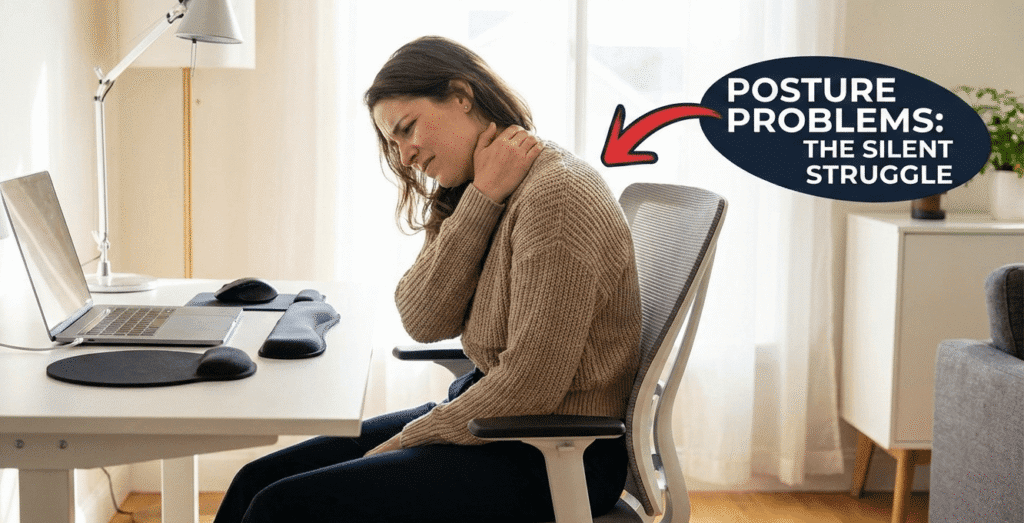

Most people assume posture problems come from bad habits – slouching, staring at screens too long, or forgetting to stretch. While habits matter, they usually aren’t the root cause. In many cases, posture issues begin much earlier, with the furniture we sit on every day.
When your chair, desk, or seating setup works against your body, poor posture becomes almost inevitable. Over time, small misalignments turn into discomfort, fatigue, and long-term strain that’s hard to reverse.
Your Body Adapts to What It’s Given
The human body is excellent at adapting – even when the setup is bad.
If your chair tilts your pelvis forward, pushes your shoulders inward, or forces your neck into a slight lean, your body will adjust to that position. The problem is that these adjustments happen quietly and gradually.
You don’t feel the damage on day one. But after weeks or months, tight hips, rounded shoulders, and lower back pain start to feel “normal”. By the time discomfort becomes noticeable, posture issues are already embedded.
Furniture Dictates How Long You Can Sit Well
Posture isn’t just about how you sit – it’s about how long you can maintain good alignment.
A poorly designed chair may feel acceptable for 10 or 15 minutes, but it fails over longer periods. As support disappears, muscles fatigue and your body looks for shortcuts. That’s when slouching begins.
This is why people often blame themselves for “bad posture” when the real issue is endurance. If your furniture doesn’t support your body properly, maintaining good posture becomes physically exhausting.
Chairs Influence Pelvic Position More Than You Think
One of the most overlooked aspects of posture is pelvic alignment. The position of your pelvis determines how your spine stacks above it.
Chairs that are too soft, too low, or angled incorrectly cause the pelvis to tilt backwards. This flattens the natural curve of the lower spine and forces the upper back to compensate.
Once this happens:
- The core disengages
- The shoulders roll forward
- The head moves ahead of the body
Over time, this chain reaction becomes your default sitting posture.
Support Should Be Active, Not Passive
Many people associate comfort with softness. In reality, overly soft furniture often makes posture worse.
Supportive furniture gently encourages your body into better alignment rather than allowing it to collapse. This is why a premium office chair often feels different from standard seating – not firmer, but more responsive.
Good support doesn’t lock you into one position. Instead, it adapts as you shift, helping your spine stay aligned without constant effort.
Desk and Chair Height Mismatch Creates Silent Strain
Even a well-made chair can cause posture issues if it doesn’t match your desk height.
If your chair is too low, you’ll raise your shoulders to reach the desk. If it’s too high, your feet lose contact with the floor and your lower back takes the strain.
These mismatches lead to:
- Neck and shoulder tension
- Reduced circulation in the legs
- Increased pressure on the lower spine
Small adjustments in furniture height can make a noticeable difference to how your body feels by the end of the day.
Static Furniture Encourages Static Posture
The human body isn’t designed to stay still for long periods. Yet many seating setups encourage exactly that.
Furniture that restricts movement forces the same muscles to stay engaged while others remain inactive. Over time, this imbalance contributes to stiffness and poor posture.
The best seating supports subtle movement – slight shifts, changes in angle, and micro-adjustments that keep muscles engaged without strain. This dynamic support helps prevent the rigidity that leads to posture problems.
Why Comfort Can Be Misleading
Short-term comfort often hides long-term issues.
A chair that feels comfortable immediately may lack the structural support needed for extended use. You might feel relaxed at first, only to notice soreness or fatigue hours later.
True ergonomic comfort isn’t about how a chair feels when you sit down – it’s about how your body feels after using it for an entire day. If you consistently feel drained, stiff, or sore, your furniture may be contributing more than you realise.
Posture Problems Affect More Than Your Back
Poor posture doesn’t just cause back pain. Over time, it can influence:
- Breathing efficiency
- Energy levels
- Concentration and focus
- Headaches and jaw tension
When your chest collapses and your neck juts forward, breathing becomes shallower. Reduced oxygen intake can leave you feeling tired and unfocused, even if you’ve slept well.
This is why posture-friendly furniture often improves productivity and comfort at the same time.
Making Better Furniture Choices Going Forward
Improving posture doesn’t always require exercises or corrective devices. Often, it starts with better everyday support.
When evaluating furniture, consider:
- Whether it supports your natural spinal curves
- How it holds your pelvis and hips
- If it allows movement rather than restricting it
- How it feels after several hours, not minutes
Furniture should work with your body, not against it.
Small Changes Can Have a Big Impact
Posture problems rarely appear overnight, and they don’t disappear instantly either. But changing the furniture you use daily can create steady improvements over time.
When your seating supports good alignment effortlessly, better posture becomes the default – not something you have to constantly think about.
In the long run, the right furniture doesn’t just make sitting more comfortable. It quietly shapes how your body feels, moves, and performs every single day.