
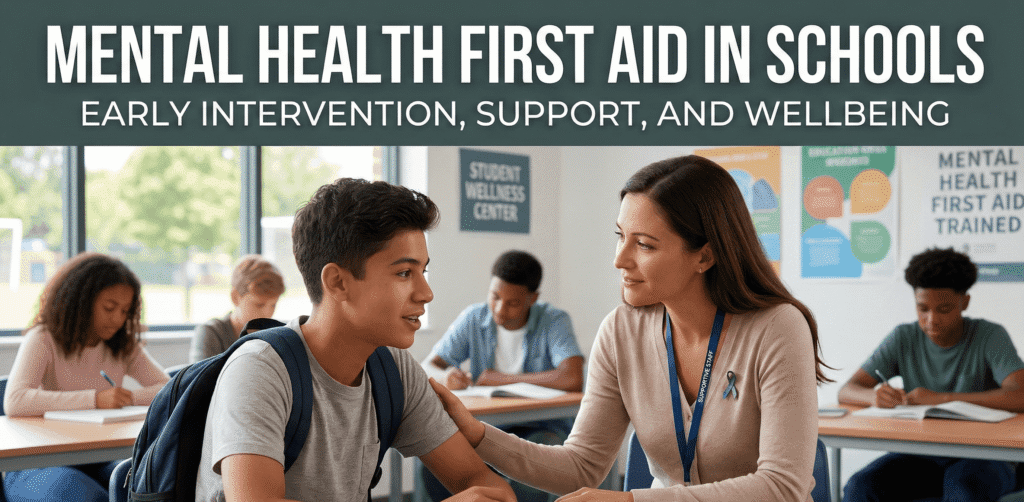

People of all ages, families, and children are all impacted by the growing prevalence of mental health disorders in the community and educational settings. Academic achievement, interpersonal connections, and general well-being may all be impacted by anxiety, depression, trauma, and behavioural issues. The first reaction to a crisis is often provided by educators, school personnel, volunteers, or community leaders, even if professional mental health treatments are still crucial. First aid for mental health gives regular people the ability to identify warning signs, provide basic assistance, and direct them towards expert treatment.
Comprehending Mental Health First Aid
The term “mental health first aid” describes the practical abilities and information needed to support someone going through an emotional crisis or mental health issue. Similar to how conventional first aid aids in stabilising physical injuries until medical assistance can be provided, mental health first aid emphasises providing prompt assistance, minimising discomfort, and avoiding escalation. Training assists participants in identifying signs of emotional trauma, drug abuse, suicidal thoughts, extreme stress, and panic attacks.
Early detection may make a big impact in learning settings. Changes in behaviour, retreat from activities, dropping grades, or abrupt mood swings may all be signs of concern, even if students don’t publicly express their difficulties. When kids are at their most vulnerable, staff members with mental health response training may gently approach them and provide comfort.
The Value Of Mental Health Services At Educational Institutions
School is more than just a place to study. Young kids learn coping mechanisms and emotional resilience in these social settings. However, kids may experience more stress due to social media effects, home issues, bullying, and academic pressure. The first people a kid turns to when they feel overwhelmed are often teachers and other school personnel.
Training in mental health enables instructors to react with confidence and sensitivity. Trained personnel are able to actively listen, validate emotions, and link kids with counsellors or other support services rather than responding with punishment or dismissal. Students feel less stigmatised and more comfortable asking for assistance because of this early intervention.
Programmes that include Mental Health Courses within their staff development activities create a supportive culture where mental health is respected. Teachers who are knowledgeable about mental health issues may create inclusive learning environments that encourage respect and emotional safety.
Enhancing Resilience And Community Responsiveness
Crisises in mental health do not just happen in schools. People in emotional distress are often seen in public programmes, youth organisations, sports groups, and community centres. Such circumstances might cause misunderstanding or inadvertent injury since volunteers and leaders often feel unprepared to address them.
Training conducted in the community teaches individuals how to react effectively in times of crisis, which increases collective resilience. Participants gain knowledge about how to evaluate danger, maintain composure, and direct people to qualified assistance. Responders may learn organised frameworks that assist them in understanding what to say, what to avoid, and how to maintain safety by taking courses like 11379NAT Initial Response to a Mental Health Crisis.
These abilities enable community members to create safer spaces where people feel encouraged rather than condemned. By encouraging early help-seeking, this feeling of safety prevents problems from becoming crises.
Making Spaces Safer By Using Early Intervention
One of mental health first aid’s most potent advantages is early intervention. Being aware of the warning signals and acting quickly may help avoid drug misuse, self-harm, or long-term mental distress. Early assistance in schools may boost student participation, attendance, and academic achievement. It may lessen social isolation and improve ties within the community.
Training courses provide a strong emphasis on communication skills, including reassurance, active listening, and nonjudgmental answers. These abilities aid responders in fostering trust and lowering anxiety in emotionally charged circumstances. Additionally, participants learn how to recognise when prompt professional help is required and how to link people with the right resources.
Completing a First Aid Mental Health Course guarantees that community leaders, volunteers, and employees are equipped to provide assistance in times of need. This readiness increases reaction effectiveness while lowering anxiety and ambiguity.
Reducing Stigma And Promoting Assistance Requests
Stigma is one of the main obstacles to receiving mental health treatment. When people talk about their issues, they often worry about being judged or misunderstood. Schools and community organisations normalise discussions about emotional well-being when they actively raise awareness of mental health issues.
Training in mental health first aid promotes compassion and understanding. Participants learn that mental health disorders are common, curable, and not a sign of weakness. Trained responders assist in lowering stigma and encouraging people to get professional assistance when necessary by encouraging candid conversations and providing answers.
In Conclusion
The ability to identify distress, provide prompt assistance, and direct individuals towards professional treatment makes mental health first aid an essential component of school and community programmes. Trained responders provide more secure and encouraging settings by reducing stigma, reducing early intervention, and responding with compassion. As awareness grows, incorporating mental health first aid training into community and school settings is a crucial step in creating communities that are healthier and more resilient.