
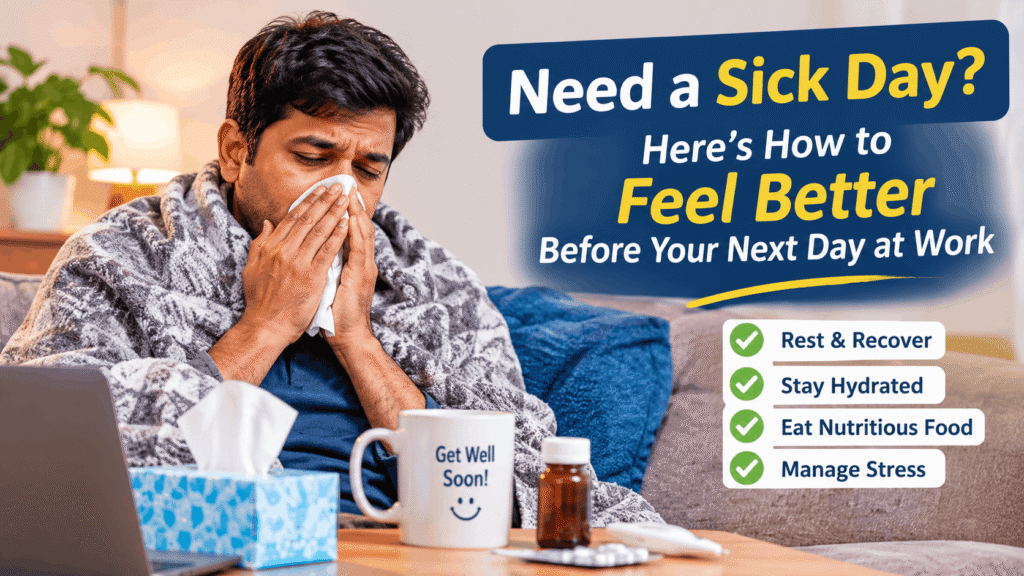

When illness strikes, your first instinct might be to call in sick and retreat to bed. While rest is important, the hours you spend recovering can significantly impact how quickly you bounce back and whether you’re truly ready to return to work. Taking the right steps during your sick day determines whether you’ll drag yourself back to the office feeling worse or show up genuinely restored. Understanding what your body needs when you’re under the weather helps you make better choices that accelerate recovery rather than simply mask symptoms temporarily.
Rest and Sleep Come First
Sleep is your body’s most powerful healing tool, and this is especially true when you’re fighting off an illness. Your immune system works hardest when you’re resting, which is why sleeping extra hours during a sick day is not laziness but medicine. Aim for at least eight to ten hours of sleep if possible, and don’t feel pressured to stick to your normal schedule. Your body needs extended recovery time to fight infection, reduce inflammation, and restore depleted energy reserves. If you find yourself awake but exhausted, lying down with your eyes closed still provides significant restorative benefit, allowing your body to focus resources on healing rather than on daily tasks.
Stay Hydrated Throughout the Day
Dehydration worsens almost every symptom associated with illness, from headaches to fatigue to congestion. When you’re sick, your body loses fluids faster than normal through fever, coughing, and other symptoms, making consistent hydration critical. Water should be your primary choice, but warm liquids like herbal tea, broth, or warm lemon water can be especially soothing when you’re not feeling well. Aim to drink at least eight to twelve glasses of water throughout your sick day, and keep a bottle within arm’s reach so you don’t have to exert yourself. Electrolyte drinks designed for rehydration can also help, particularly if vomiting or diarrhea has accompanied your other symptoms.
Nourish Your Body with the Right Foods
What you eat during a sick day matters more than you might think. Your body needs proper nutrition to produce white blood cells and other immune components necessary for fighting infection, so eating nutritious foods accelerates recovery. Simple, gentle foods like chicken soup, crackers, toast, fruit, and oatmeal won’t overtax your digestive system while still providing necessary calories and nutrients. Avoid heavy, greasy, or spicy foods that can upset your stomach or aggravate symptoms. If your appetite is minimal, try eating small amounts throughout the day rather than skipping meals entirely, since vitamin C from citrus and bell peppers and zinc from nuts or seeds can further support immune function.
Manage Symptoms Appropriately
Using over-the-counter medications strategically can reduce discomfort without interfering with your body’s natural healing process. Fever and body aches can be addressed with ibuprofen or acetaminophen according to package directions, though a slightly elevated temperature actually helps your body fight infection more effectively. For congestion, a saline rinse or neti pot can provide relief without medication, and a humidifier or steam from a hot shower can open airways naturally. Throat lozenges, honey, or warm salt water can soothe soreness as well. Read all medication labels carefully and never exceed recommended doses, since doing so can prolong your illness rather than speed recovery.
Create an Optimal Recovery Environment
Where and how you rest affects both your recovery speed and your comfort. Keep your bedroom or resting space cool, dark, and quiet, as these conditions promote deeper sleep and reduce additional stress on your body. Change your sheets if possible, since fresh bedding feels better and limits reinfection from bacteria lingering on used linens. Avoid screens such as phones, computers, and televisions, because blue light and mental stimulation interfere with sleep quality and prevent your brain from fully resting. Open a window for fresh air if weather permits, but avoid drafts that might chill you uncomfortably.
Know When to Seek Medical Care
Most common illnesses resolve within a few days with proper home care, but some situations require professional medical attention. If symptoms worsen significantly or you experience difficulty breathing, chest pain, confusion, or an extremely high fever, contact a healthcare provider right away. For area residents, urgent care in Punta Gorda offers fast, professional evaluation when symptoms become severe enough to need attention before you can safely return to work. If your illness persists beyond seven to ten days without improvement, or if new and concerning symptoms develop, a medical evaluation is equally appropriate. Taking your sick day seriously and following recovery best practices means you are far more likely to return to work genuinely healthy rather than still contagious or barely functional.
Conclusion
A sick day is an investment in your long-term health and productivity, not a luxury or a sign of weakness. By prioritizing sleep, maintaining hydration, eating nourishing foods, managing symptoms sensibly, and optimizing your environment, you can transform a day in bed into genuine recovery. When you return to work, you will be more capable of performing well and less likely to relapse or spread illness to colleagues. The time you spend truly recovering pays dividends in faster healing, better performance, and a quicker return to your normal routine.