
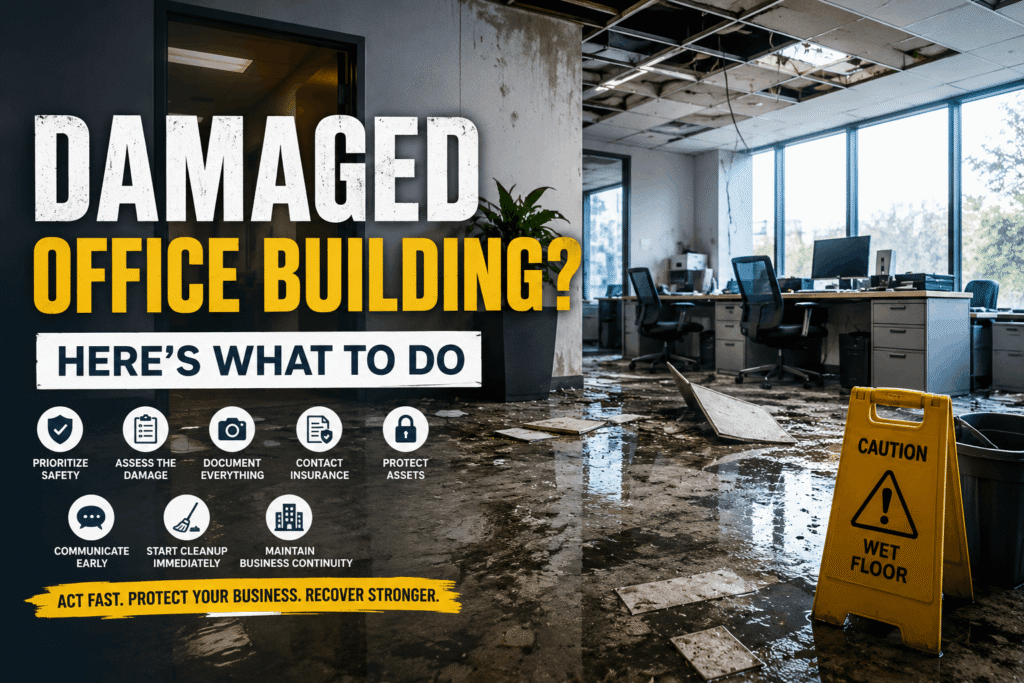

A damaged office building can create significant challenges for any business. Whether the damage is caused by severe weather, flooding, fire, plumbing failures, or other unexpected events, property damage can disrupt operations, affect employee safety, and create financial strain. In many cases, every hour of downtime can impact productivity, customer service, and revenue.
The good news is that taking prompt and organized action can help minimize losses and accelerate recovery. By focusing on safety, documentation, communication, and restoration, business owners can navigate the situation more effectively and begin the process of returning to normal operations.
Prioritize Safety and Restrict Access
The first step after discovering damage is ensuring the safety of everyone who may enter the building. Structural issues, electrical hazards, exposed materials, and water damage can pose serious risks if not properly addressed.
Limit access to affected areas until a thorough assessment can be completed. If necessary, temporarily close sections of the building or relocate employees to alternative workspaces. Protecting people should always take priority over resuming operations.
Assess the Extent of the Damage
Once the property is deemed safe to enter, conduct a careful inspection of the damage. Evaluate walls, ceilings, flooring, equipment, furniture, electrical systems, and any other affected components.
A comprehensive assessment helps determine the scope of repairs required and allows business owners to create a clear recovery plan. Understanding the full extent of the damage early can also help prevent overlooked issues from becoming larger problems later.
Document Everything Thoroughly
Proper documentation is critical following any property damage event. Take detailed photographs and videos of all affected areas before major cleanup efforts begin. Capture damage from multiple angles and keep records of impacted equipment, inventory, and furnishings.
Maintain copies of repair estimates, invoices, and communications related to the incident. Thorough documentation can be valuable when working with insurance providers and restoration professionals throughout the recovery process.
Contact Your Insurance Provider
Insurance coverage often plays an important role in recovering from property damage. Notify your insurance company as soon as possible and follow their instructions regarding inspections and claims documentation.
Provide all requested information and maintain organized records of your communications. Prompt reporting can help move the claims process forward more efficiently and provide greater clarity regarding available coverage.
Protect Important Business Assets
Business assets such as computers, servers, documents, and specialized equipment may be vulnerable after a damaging event. If it is safe to do so, remove critical items from affected areas or take steps to protect them from further damage.
Back up important digital data whenever possible and verify that essential records remain accessible. Protecting information and equipment can help reduce operational disruptions and support a faster return to productivity.
Communicate With Employees and Clients
Uncertainty can be stressful for both employees and customers. Clear communication helps maintain trust and allows everyone to understand how the business plans to move forward.
Keep employees informed about safety conditions, temporary work arrangements, and expected recovery timelines. Customers and clients should also receive updates regarding any service interruptions or operational changes that may affect them.
Begin Cleanup and Restoration Quickly
Delaying cleanup can allow damage to worsen. Water intrusion may lead to mold growth, while smoke residues and other contaminants can continue affecting the property over time.
Many businesses contact an emergency restoration company to help assess damage, mitigate additional losses, and begin the restoration process as quickly as possible. Professional restoration services can often identify hidden damage and implement solutions that support a more complete recovery.
Develop a Business Continuity Plan
If operations are interrupted, creating a temporary continuity plan can help maintain essential business functions. This may involve remote work arrangements, temporary office locations, adjusted operating hours, or alternative methods of serving customers.
Businesses that adapt quickly are often better positioned to minimize revenue losses and preserve customer relationships. A continuity plan provides structure during a challenging period and helps maintain momentum while repairs are underway.
Conclusion
A damaged office building can be disruptive, but taking the right steps can significantly improve the recovery process. Prioritizing safety, assessing damage, documenting losses, communicating effectively, protecting critical assets, beginning restoration promptly, and maintaining business continuity can all help reduce the impact of the situation.
While property damage can feel overwhelming, a proactive and organized approach allows businesses to recover more efficiently. With the right support and planning, it is possible to restore operations, protect valuable resources, and move forward with confidence.