
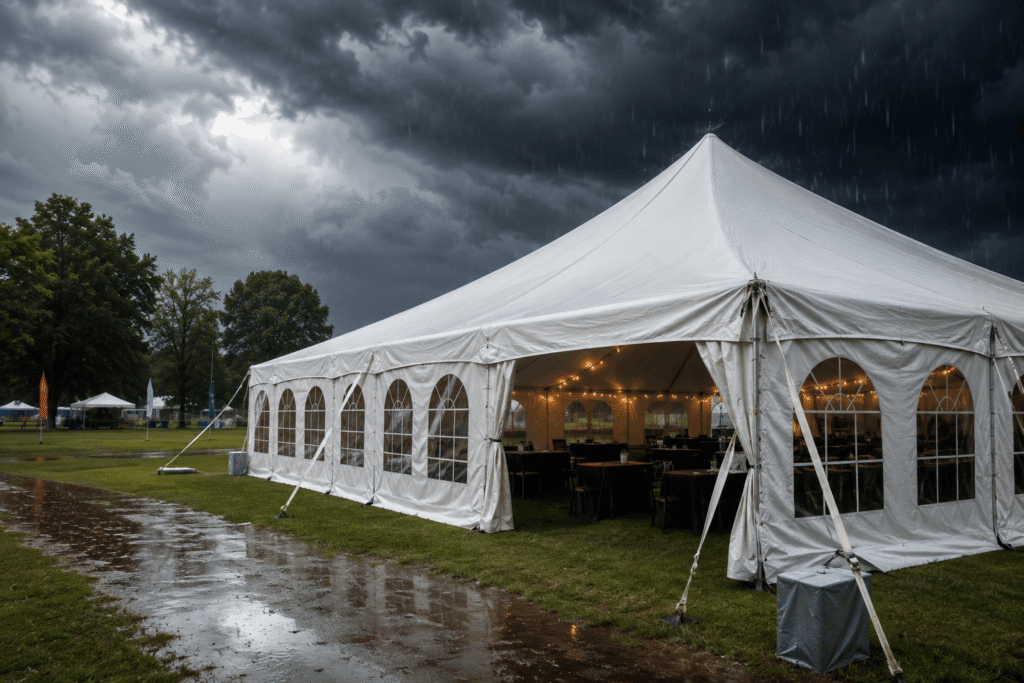

Some mornings start clear but turn blustery by afternoon. When skies open up or gusts pick up, tents and canopies face real tests. Those running stalls or managing gatherings usually expect shifts in the forecast. Unsteady weather isn’t a surprise, just routine groundwork. Planning means preparing for what might blow in.
When the weather turns tricky, picking a tent means looking past how big it seems or what it looks like. Wind, rain, or sudden shifts test how steady the structure stays, how dry things inside remain, and even how pleasant the whole time feels. Just because something holds up on a quiet day does not mean it handles storms without issues. Investing in professional custom tents designed for commercial use ensures reliable performance no matter what conditions arrive.
Tents for Unpredictable Weather Conditions: Choosing Reliable Shelter for Outdoor Events
1. Strong Frames Help Stability
It’s the wind that exposes your tent’s weaknesses before the rain ever shows up. However, no matter how strong the winds are, a solid build handles it better when the surface shifts beneath. Steel can withstand many uses and constant assemblies for different shows by holding firm through seasons of use. On the other hand, aluminum is often chosen because it’s easy to carry around with less effort. What holds shape under strain tends to weigh more, yet lightness wins out where movement matters. What works hinges on how well power mixes with ease of movement.
2. Fabric Quality Affects Durability Beyond Looks
Tent material isn’t just about showing a name or blocking sunlight. Moisture sneaks into cheaper materials, leaving them soggy over time. Sunlight? It bleeds color from basic weaves until they look worn thin. Out in the open, day after day, flimsy stuff frays faster than you’d notice. Heavy-duty textiles brush off downpours like nothing. Ultraviolet rays try their best; commercial cloth hardly blinks. Regular pounding from use doesn’t rattle its core. When skies shift without warning, staying shielded becomes key.
3. Weather Affects Setup
Small design details frequently shape performance outdoors. When rain hits, tightly stitched seams keep drips out. Tough spots at each corner handle rough handling without tearing. Air moves through small vents that stop fogging inside. Straps snap shut firmly so wind cannot lift the edges. Water runs away more easily thanks to sloped roof designs. Breathable fabric lets steam escape slowly. A steady breeze passes under the roof line. Comfort grows when dampness has a way out. Reliable performance often starts with details that many people overlook.
4. Anchoring Systems Lower Risk
A tent built tough can still fail if it isn’t held down right. Anchoring matters more than most think when winds pick up. Loose corners pull free faster than expected in storms. Without solid fastening, even heavy-duty fabric gives way. When gusts pick up, weights along with stakes keep things steady. Sandbags work well where anchors might fail. Each surface type needs its own hold-down method. Planning means checking what lies underfoot before setup begins. What keeps everything steady isn’t just the frame alone. Other hidden supports quietly carry their share of the work.
5. Select Tent Based on Event Weather and Location
A lone shelter won’t suit each wild setting. Different conditions demand different covers. One reason some pop-up setups go light is the quick moves between spots. When storms might show up, thick fabric and solid frames usually work better. Where you are matters just as much as how long it runs. Big groups mean sturdier builds most times. The time of year shifts what gear fits best. Thinking ahead on these points shapes smarter picks. Most times, getting ready counts for more than guessing what might happen.
6. Combining Shelter Types for Maximum Coverage
Sometimes one structure type isn’t enough for a full event setup. Mixing traditional canopy tents with eye-catching alternatives creates a more complete presence. When standard shelters handle the main crowd, bold additions like custom inflatable arches mark entry points and guide visitors’ flow naturally through the space. This combination keeps things practical while boosting visual impact across the entire venue.
Final Thoughts
When storms might show up, picking a tent needs more than just looks or ease. A solid frame can handle wind that weaker poles bend under. Tough fabric shrugs off rain and sun without wearing thin. Features built for bad conditions make staying dry far more likely. Anchors driven deep keep the whole setup from sliding across wet ground. Safety out there ties directly to these choices. When things change fast, firms that plan ahead usually keep gears safe, look more organized, and still function well. Success outside often starts long before skies turn gray.