
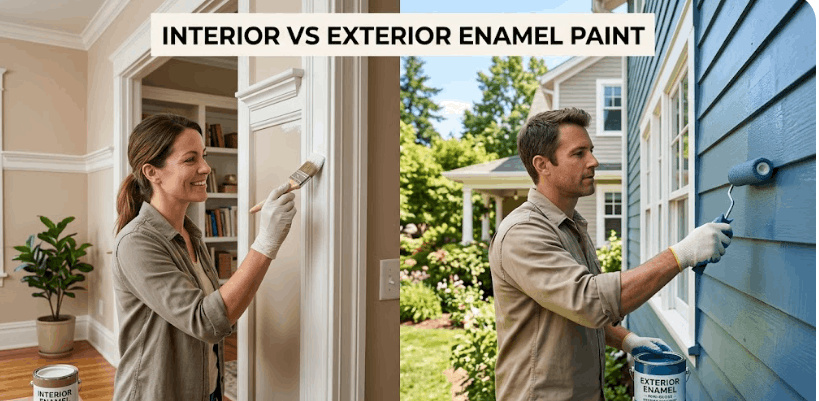

Paint can change how a surface looks, but the right type also affects how long that finish stays in good condition. Interior and exterior enamel paints may seem similar, yet they are made for very different uses. Choosing between them is not only about appearance.
This blog explains what enamel paint is, how interior and exterior types differ, when each should be used, and what to consider before making a selection.
What is Enamel Paint?
Enamel paint is a type of paint known for forming a hard, smooth, and easy-to-clean surface after it dries. It is often chosen for places where a neat finish and better resistance to marks, moisture, or regular cleaning are needed. Depending on the product, it can have a glossy, semi-gloss, or satin look. Its main purpose is to provide a more durable painted surface while also giving a clean and polished appearance.
Key Differences Between Interior vs Exterior Enamel Paint
Interior and exterior enamel paints are made for different conditions. Knowing these basic differences can make it easier to choose the right paint and avoid using the wrong one on a surface.
| Aspect | Interior Enamel Paint | Exterior Enamel Paint |
| Durability | Made for indoor surfaces that face regular cleaning, frequent touch, and minor marks. | Made for stronger outdoor exposure, including sun, rain, dust, and changing temperatures. |
| Weather Resistance | Not made to handle direct sunlight, frequent moisture, or outdoor climate changes. | Made to work better in outdoor conditions where surfaces face heat, humidity, and rain. |
| Finish and Appearance | Usually focused on giving a smooth, neat, and decorative finish for indoor spaces. | Focused on keeping its look stable while also handling outdoor stress more effectively. |
| Chemical Composition | Often prepared for indoor use, with features that support easier application and low-odour use. | Usually contains components that help the coating handle weather and changing outdoor conditions. |
| Maintenance | Easier to maintain indoors because the surface is less exposed to harsh dirt and weather. | May need more regular checking as outdoor surfaces are exposed to dust, moisture, and changing weather over time. |
These differences show why interior and exterior enamel paints should not be used interchangeably. Choosing the right one helps maintain finish, durability, and surface suitability.
When to Use Interior vs Exterior Enamel Paint
The choice between interior and exterior enamel paint depends on the location, exposure, and the surface’s needs. A paint that works well indoors may not perform properly outside, even if the finish looks similar at first.
Interior Enamel Paint
Interior enamel paint is suitable for surfaces inside the home or building where a clean finish and easier maintenance are important. It is often used on surfaces that need to look smooth and stay easier to wipe or wash. Since indoor spaces are less affected by harsh weather, this type is made to work well under stable conditions and everyday household use.
Exterior Enamel Paint
Exterior enamel paint is suitable for surfaces outside the building that are exposed to the elements. It is made for places exposed to heat, rain, dust, and humidity over time. This type of paint is chosen when the surface needs both a finished appearance and better resistance to outdoor conditions.
Cost Considerations
The cost of interior and exterior enamel paint can differ because they are designed for different performance levels. Exterior enamel paint may cost more because it is made to handle weather exposure and outdoor surface stress.
Interior enamel paint may be less expensive for enclosed spaces where such protection is not needed. However, price should not be the only factor. Choosing the correct type can help avoid earlier repainting and reduce long-term surface maintenance needs.
Conclusion
Interior and exterior enamel paint may look alike in the container, but they serve different purposes after application. Interior enamel paint is better suited for appearance, smoothness, and regular indoor cleaning. Exterior enamel paint is better suited for surfaces that are exposed to the weather and environmental changes. Knowing the difference helps in making a more suitable choice for each area. A well-matched paint type supports better finish quality, more appropriate maintenance, and a result that better suits the surface.