
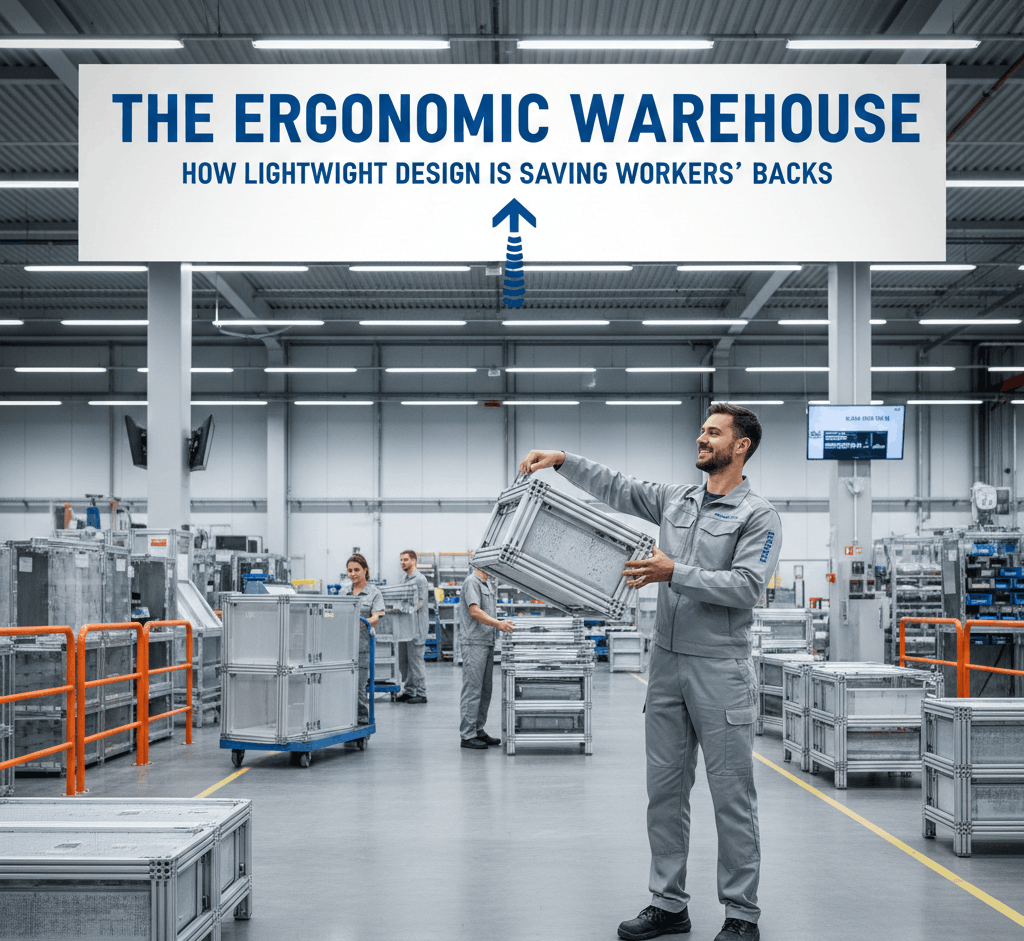

Warehouses are the backbone of modern commerce, yet they remain one of the most physically demanding work environments. Daily tasks often involve lifting, carrying, bending, and repetitive motion, all of which place strain on the body over time. Musculoskeletal injuries, particularly back injuries, continue to be a leading cause of missed workdays and reduced productivity in logistics and distribution centers. As labor challenges grow and safety expectations rise, many organizations are rethinking how warehouse design affects the health of their teams. Lightweight design has emerged as a powerful way to protect workers while improving operational efficiency.
Why Back Injuries Remain a Persistent Warehouse Challenge
Back injuries rarely result from a single dramatic incident. More often, they develop gradually through repeated strain and awkward movements. Heavy containers, oversized packaging, and poorly designed handling tools force workers to compensate with their bodies. Over time, these compensations add up, leading to fatigue, discomfort, and eventually injury.
Traditional safety programs tend to focus on training workers how to lift properly. While training is important, it cannot fully offset the physical demands of moving heavy or poorly balanced loads. When the work environment itself contributes to strain, even the most diligent employees are at risk. Addressing the root causes of injury requires changes to the tools, materials, and systems workers interact with every day.
Lightweight Design as a Foundation for Ergonomics
Lightweight design shifts the focus from worker behavior to workplace structure. By reducing the weight of containers, components, and handling equipment, companies can significantly lower the physical burden placed on employees. Lighter materials reduce the force required for lifting, carrying, and positioning, which in turn decreases stress on the spine and supporting muscles.
This approach does not mean sacrificing durability or performance. Advances in material science allow manufacturers to create strong, resilient products that weigh far less than traditional alternatives. Lightweight totes, pallets, and work surfaces are easier to maneuver and encourage safer movement patterns. When workers are not constantly bracing against heavy loads, they can maintain better posture and work more efficiently throughout their shifts.
The Role of Equipment and Material Innovation
Ergonomic warehouses rely heavily on thoughtful equipment design. Carts with improved balance, adjustable height workstations, and modular storage systems all contribute to reduced strain. However, one of the most impactful changes often comes from reengineering the components workers handle most frequently.
Many organizations are turning to custom thermoforming to create lightweight, contoured parts and containers tailored to specific workflows. These solutions can be designed with integrated handholds, smooth edges, and precise dimensions that reduce awkward grips and unnecessary movement. By matching form to function, custom components support natural body mechanics rather than working against them. Over time, these incremental improvements can dramatically reduce cumulative stress on workers’ backs.
Productivity Gains From Ergonomic Improvements
Investing in ergonomic design is not solely a safety initiative. It also delivers measurable productivity benefits. Workers who experience less fatigue can maintain consistent output throughout the day. Reduced injury rates lead to fewer absences, lower workers’ compensation costs, and less reliance on temporary labor.
Lightweight systems also streamline processes. Employees can move faster and with greater confidence when loads are manageable. Equipment that is easier to handle requires less time to position and reposition, reducing wasted motion. These efficiencies compound across shifts and teams, contributing to smoother operations and improved throughput. In many cases, the gains in productivity and reduced downtime offset the initial investment in ergonomic upgrades.
Building a Culture That Supports Ergonomic Design
Physical changes alone are not enough to create a truly ergonomic warehouse. Organizational culture plays a critical role in sustaining improvements. Leadership must demonstrate a commitment to worker well being by prioritizing safety in design decisions and daily operations. When employees see that their comfort and health are valued, they are more likely to engage with new systems and provide useful feedback.
Regular assessments help ensure that ergonomic solutions continue to meet evolving needs. As order profiles change or new products are introduced, equipment and materials should be reviewed for weight, size, and handling requirements. Encouraging workers to report discomfort early allows adjustments before minor issues become serious injuries. A collaborative approach turns ergonomics into an ongoing process rather than a one time initiative.
Planning for Long Term Workforce Sustainability
As the workforce ages and labor markets tighten, protecting employees’ physical health becomes even more important. Experienced workers bring valuable knowledge, yet they may be more vulnerable to injury if tasks remain physically demanding. Lightweight design helps extend careers by reducing wear and tear on the body.
Younger workers also benefit from ergonomic environments that set healthy patterns from the start. When safe movement and manageable loads are built into daily tasks, good habits develop naturally. This proactive approach supports long term workforce sustainability and helps organizations remain competitive in an increasingly demanding logistics landscape.
Conclusion
The modern warehouse is evolving, and ergonomics is no longer optional. Back injuries carry high costs for workers and employers alike, affecting health, morale, and operational performance. Lightweight design offers a practical and effective way to reduce strain at its source by rethinking the materials and tools employees use every day. When warehouses are designed to support the human body rather than challenge it, workers stay healthier, productivity improves, and businesses build a safer foundation for growth.