
Every generation has faced a moment when the youth seem to have collectively lost their minds. For boomers, it was Beatlemania. For Gen X, it was MTV and punk rock. For millennials, it was random internet challenges. For Gen Z, it was the Skibidi Toilet. And for Gen Alpha, it is “6-7.”
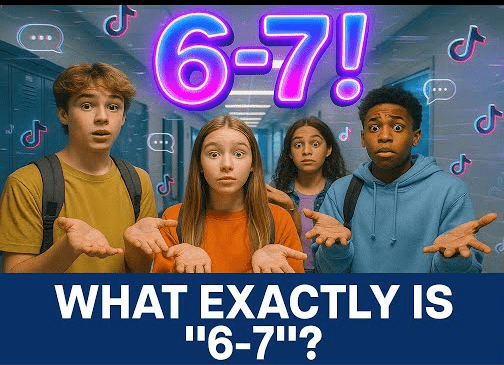
Yes, “6-7” — ordinary numbers that now hold the power to disrupt classrooms. If you walked into one lately, you may have already heard it. A teacher says, “Turn to page 67,” and suddenly the entire class erupts. Books are slammed, chairs are shaken, children scream “6-7!” Some schools have gone so far as to ban it entirely. Others have tried to co-opt it, but the more adults fight it, the stronger it grows.
Because, let’s be honest, we’ve all been there — nothing delights kids more than rebellion. But where did “6-7” even come from? The origin story is pretty weird. It began with a 2024 rap song called Do Seven. The chorus repeated the numbers. Then came TikTok. The sound was mashed into basketball highlights. A high school player added to it, and within weeks, it became an internet sensation.
Kids parroted the phrase everywhere. Ask ten kids what “6-7” means, and you will get ten different answers — maybe even a few laughs. Some say it means “so-so.” Others insist it’s just a vibe. Most would say it’s just funny — and that’s, I guess, the whole point. “6-7” doesn’t need meaning. It’s what linguists call a semantically bleached phrase — words stripped of definition.
All that’s left is shared recognition. Basically, it’s a big inside joke. If you get the joke, even when there isn’t one, you’re in — you’re part of the so-called cool club.
A New Language of the Internet Generation
Now, if you were born before 2000, you may be wondering: What does this even mean? Does it even make sense? Well, it doesn’t. Every generation invents this kind of nonsense. The “6-7” slang is not just for fun — it is social architecture. Apparently, it builds walls and bridges simultaneously. It’s a way to bond with your peers, but it also keeps your parents and teachers clueless.
And it’s not happening in isolation. It’s part of a larger wave of what is known as brain rot humor — jokes that are deliberately meaningless. Think terms like “Skibidi” or made-up words like “dilulu,” which means delusional. In a hyper-connected world, nonsense has become the new common tongue.
The meaning may be optional, but participation is everything. So, should you scream out “6-7” with the kids too? When we say, don’t — set it aside. It’s “6-7” today; it will be something else tomorrow. That’s how fleeting internet trends are. By the time you get it, it may already be out of fashion, and you’ll just end up out of place again.
And that, I guess, is the point too. Trends come and go. It’s chaotic, fleeting, maybe even a little bit confusing — especially for parents and teachers. But that’s exactly the point. Every generation has its own shorthand for growing up, and right now, this “6-7” belongs to Gen Alpha.