

Last updated: February 2026
My neighbour Marcus drives about 400 miles a week for his HVAC business. Last fall, he called me from a job site outside Austin, genuinely excited. Not about the engine, not the tow rating. Because his truck had just updated itself overnight and added a new trailer camera calibration feature, he didn’t even know to ask for. “It’s like the truck is getting smarter while I sleep,” he said. That’s the 2026 F-150 in a nutshell.
The 2026 F-150 smart tech features aren’t a list of checkboxes Ford tacked on to compete with Ram and Chevy. They’re a coherent system built for people who treat their truck as a rolling office, a mobile power station, and a daily commuter simultaneously. This guide breaks down what’s actually worth paying for, what’s genuinely new, and what’s still missing.
What Are the Core 2026 F-150 Smart Tech Features?
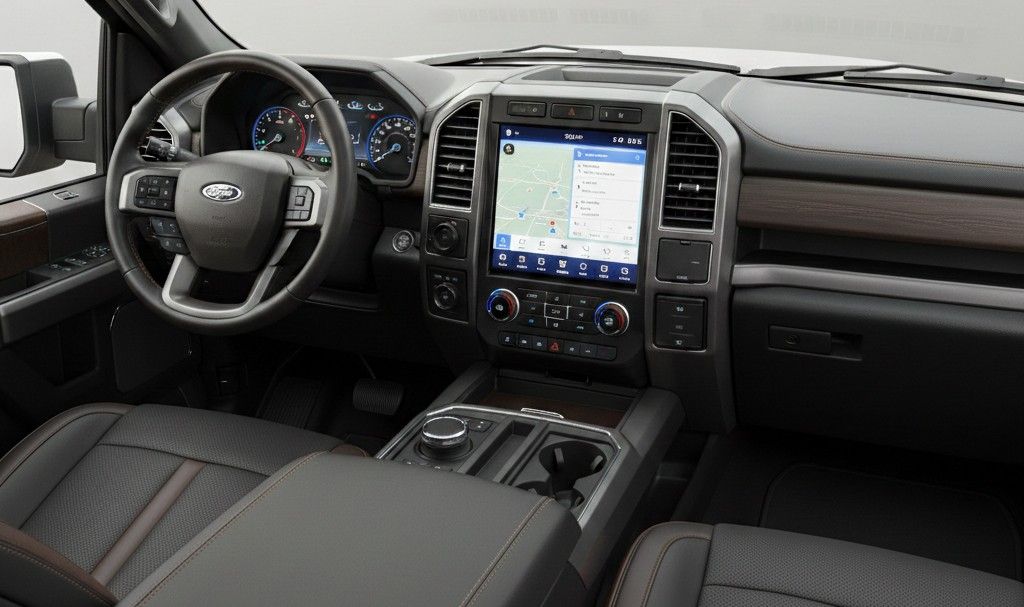
Every 2026 F-150 now includes a 12-inch digital instrument cluster and 12-inch SYNC 4 touchscreen as standard, with wireless Apple CarPlay and Android Auto integrated across all trims, including the base XL. That’s the baseline. The tech story gets more interesting as you layer in connectivity, autonomy, and onboard power.
| Feature | XL/XLT | Lariat → Platinum |
| 12″ SYNC 4 Touchscreen | Standard | Standard (15.5″ SYNC 4A available) |
| Wireless CarPlay/Android Auto | Standard | Standard |
| 5G Modem | Standard | Standard |
| BlueCruise Hands-Free | Available (XLT) | Standard |
| Ford Connectivity Package | 1-Year Trial | 1-Year Trial |
| Pro Power Onboard (Hybrid) | Add-on ($850) | Add-on ($850) |
The Connectivity Package: Genuinely Useful or Expensive Bloatware?
The Ford Connectivity Package is the digital backbone of the truck’s smart features. It bundles an unlimited 5G Wi-Fi hotspot (supporting up to 10 devices within 50 feet), Google Maps with real-time traffic, Google Assistant/Alexa Built-in, and the ability to stream video (Max, YouTube, Peacock) while parked.
The Cost Reality: After your initial one-year trial, you have three distinct paths to keep the lights on:
-
Monthly: $14.99
-
Annually: $149.95
-
One-Time Purchase: $745 (valid for a minimum of 7 years).
Important Note: The $745 one-time purchase is a “point-of-sale” exclusive. If you don’t select it when ordering your truck or at the dealership during the sale, it disappears as an option. Post-purchase, you are locked into the monthly or annual subscription model.
For a full pricing breakdown, who it’s worth buying for, and what you lose when the trial expires, see our analysis on whether the Ford Connectivity Package 2026 price and features are actually worth the $745 investment.
BlueCruise: Hands-Free Driving Gets Democratized
This is arguably the biggest practical upgrade for 2026. BlueCruise hands-free driving is now available on the XLT in addition to the Lariat, King Ranch, Platinum, and Tremor. Previously, you had to spend Lariat money ($50K+) to access it. Now it drops into XLT territory around $42,000.
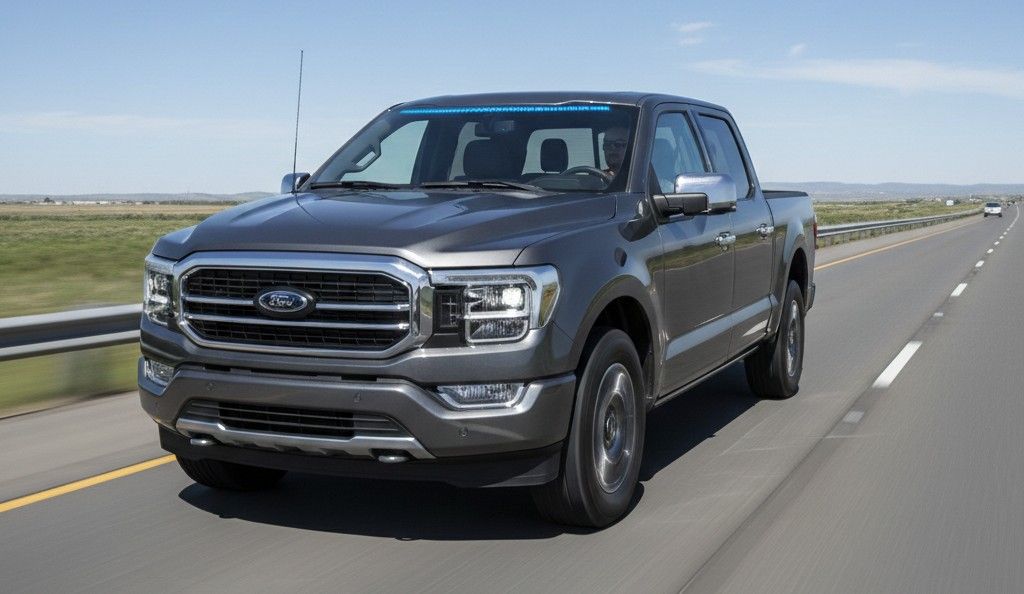
On mapped, divided highways called Hands-Free Blue Zones, the truck handles steering, acceleration, and braking while you keep your eyes forward. The honest limitation: GM’s Super Cruise already supports hands-free trailering on select Silverado and Sierra models. Ford hasn’t officially endorsed hands-free towing yet. If you’re a frequent tower user comparing both systems in 2026, that gap matters.
To dive deeper into the technical side, including a step-by-step activation guide and F-150 BlueCruise safety rankings, check out our full comparison of how Ford’s system stacks up against GM’s Super Cruise and where it currently falls short for heavy towers.
OTA Updates: The Feature You’ll Never See Coming
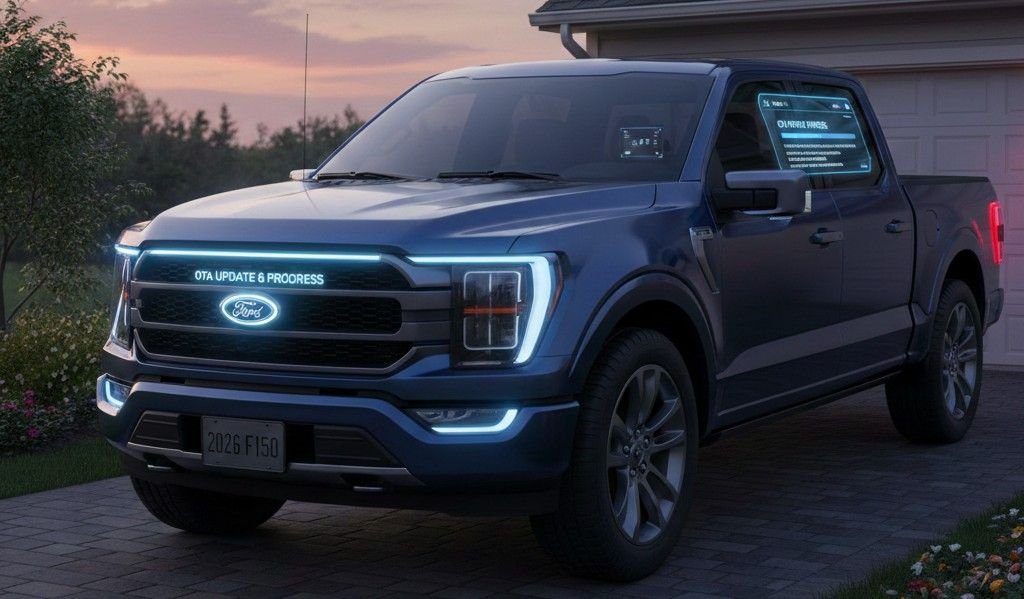
Over-the-air software updates allow the truck’s systems to receive performance, connectivity, and security upgrades without visiting a dealer. Ford can push calibration improvements, add features mid-ownership, and patch software vulnerabilities — all while the truck sits in your driveway overnight.
Marcus’s story above wasn’t hypothetical. Ford pushed a trailer camera recalibration update in Q4 2025 that improved accuracy on fifth-wheel hitches. He didn’t schedule a service appointment. He didn’t pay anything. He just woke up to a better truck. When you buy a 2026 F-150, you’re buying what Ford is willing to continue building into it.
→ How background vs non-drivable updates work, what actually gets updated, and setup instructions: F-150 Over-the-Air Updates: How They Work and Why They Matter More Than You Think
SYNC 4 vs. SYNC 4A: Which One Do You Actually Need?
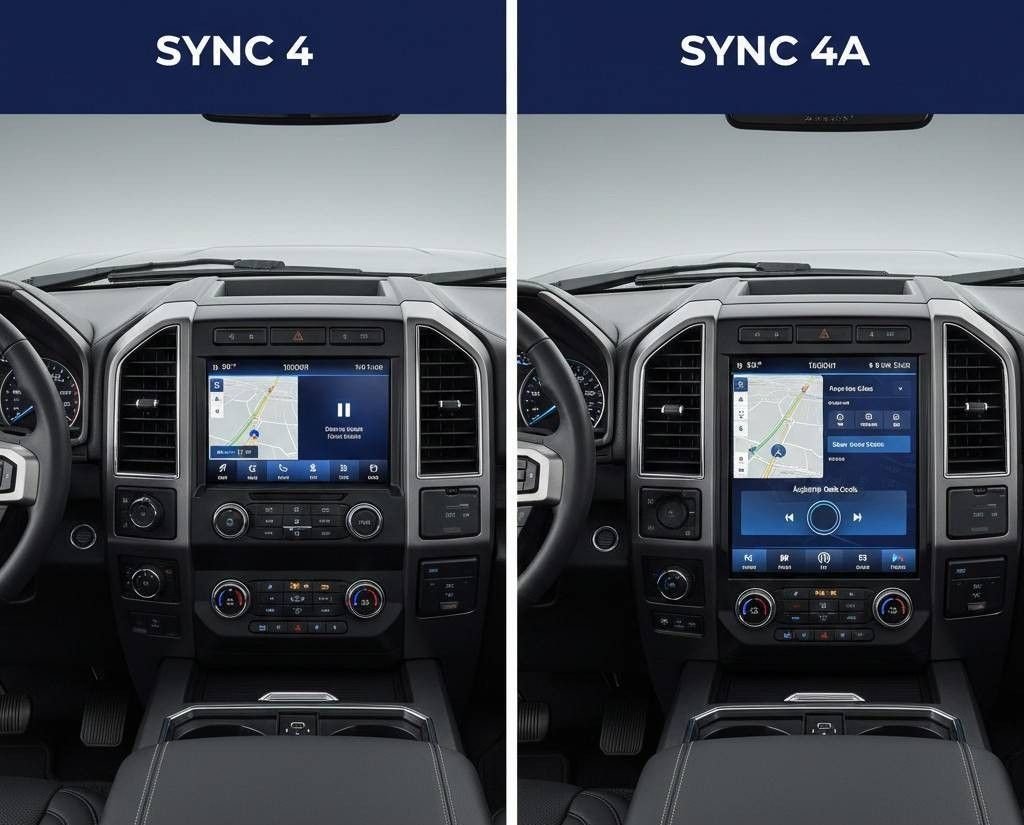
SYNC 4A (available on higher trims) features larger 12 or 15.5-inch portrait-oriented touchscreens, Adaptive Dash Cards that reorganize based on your usage patterns, and a deeper voice command layer. SYNC 4 (standard on most trims) gets you the 12-inch horizontal display with the same OTA capability.
For most daily drivers, SYNC 4 is plenty. For someone who spends six hours in the cab and wants the closest thing to a command center short of a Ram TRX, the 15.5-inch SYNC 4A is worth the trim jump. One critical fact Ford confirms in its documentation: SYNC 4 cannot be upgraded to SYNC 4A post-purchase. The hardware is different.
→ Full trim-by-trim breakdown, Adaptive Dash Cards explained, and the cost reality: F-150 SYNC 4 vs SYNC 4A: Which One Do You Actually Need?
Pro Power Onboard: Mobile Office Meets Worksite Generator
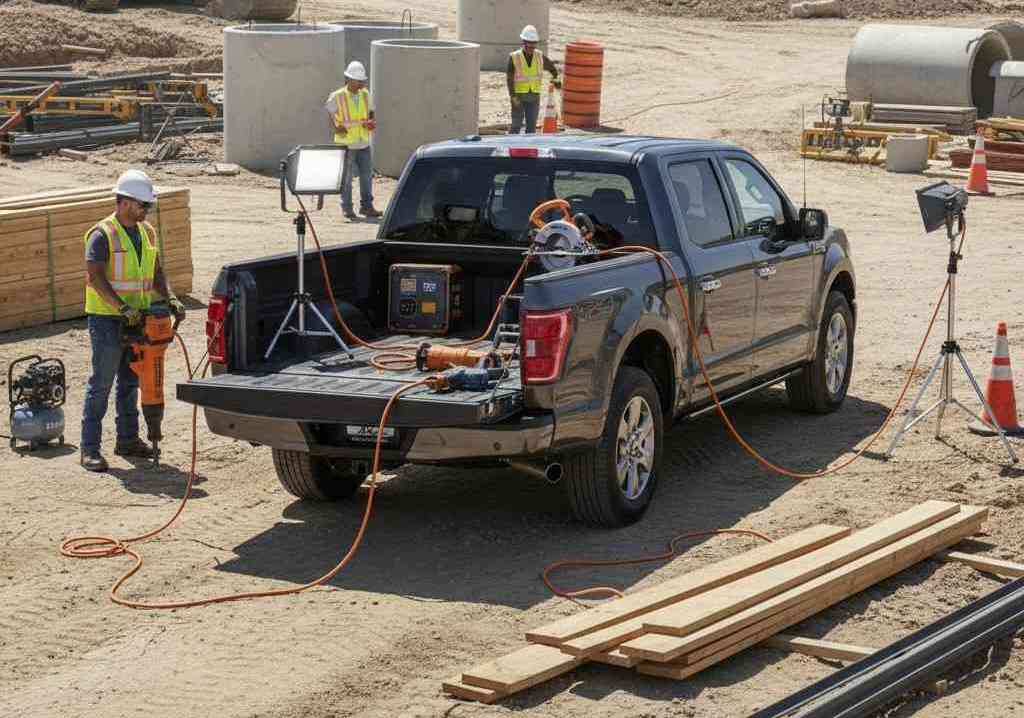
Pro Power Onboard is a built-in generator in the bed, available on select models, for powering tools, lights, or tailgate setups directly from the truck’s battery or engine. On the PowerBoost hybrid, you get 7.2kW of exportable power — enough to run a circular saw, a job-site light tower, and charge a laptop simultaneously.
For contractors in remote areas, that eliminates the cost and logistics of a separate generator. A comparable 7,000-watt Honda generator runs $1,200 to $1,500 and requires its own fuel load. A construction foreman named Derek, managing three crews across northern Georgia, told me his PowerBoost F-150 replaced a generator rental he’d paid $180/month for. He recouped the $850 option cost in about five months.
→ Output tiers, Utility Idle Mode, the generator cost comparison, and activation steps: F-150 Pro Power Onboard: The Built-In Generator That Changes How You Work
Ford Co-Pilot360: Driver Assistance Without the Jargon
Ford Co-Pilot360 has been upgraded with improved pedestrian detection, adaptive cruise control, and trailer-aware blind-spot monitoring. Standard blind-spot monitoring can get confused by trailers and may flag the trailer itself as a hazard. Trailer-aware blind-spot monitoring detects when a trailer is attached and adjusts the detection field accordingly.
The NHTSA’s 2024 final rule on automatic emergency braking requires AEB on nearly all new light vehicles under 10,000 pounds GVWR, which includes every F-150 trim. Even the base XL now comes with this federally required collision prevention technology as standard, not as a luxury add-on. For more details, visit Ford Co-Pilot360.
What the 2026 F-150 Still Can’t Do (Yet)
Ford’s BlueCruise 1.3 does not support hands-free trailering. GM’s Super Cruise does on select Silverado models. The Connectivity Package is also a subscription at its core — after the one-year trial, you either pay $745 one-time or lose the hotspot and app ecosystem. See our
Detailed Connectivity Package breakdown for the full post-trial options and who should buy before the dealer window closes.
FAQs
Does the 2026 F-150 have 5G connectivity standard?
Yes. A 5G modem is now included on the XL and all higher trims for 2026, enabling faster hotspot speeds and quicker OTA update delivery across the full lineup.
What happens after the Ford Connectivity Package trial expires?
You lose Wi-Fi hotspot, Google Maps integration, voice assistant features, and app downloads. Basic functions like Apple CarPlay, Android Auto, and Bluetooth continue working.
Can the 2026 F-150 tow hands-free using BlueCruise?
Not officially. Ford hasn’t endorsed hands-free towing. See our F-150 BlueCruise guide for the full Super Cruise comparison.
How much does BlueCruise cost on the 2026 F-150?
Between $2,000 and $2,495 depending on trim, with monthly and annual subscription options after the 90-day trial.
What is the Pro Power Onboard output on the hybrid F-150?
7.2kW on the PowerBoost Full Hybrid as an $850 option — enough to run multiple power tools or small appliances simultaneously at a job site.
The Honest Verdict
Three things worth remembering: BlueCruise dropping to the XLT trim is a significant value shift for high-mileage highway drivers. The Connectivity Package is worth the $745 only if you use the hotspot heavily and make the decision before leaving the dealership. Finally, OTA updates mean the truck you drive in year two will likely be noticeably better than the one you originally purchased. For more on hands-free driving technology, see Wikipedia – Advanced Driver-Assistance Systems. For federal vehicle safety regulations, including automatic emergency braking standards, see the National Highway Traffic Safety Administration (NHTSA).
If you’re evaluating the 2026 F-150 smart tech features against a Ram 1500 with Uconnect 5 or a Silverado with Super Cruise, the head-to-head on hands-free towing still leans toward GM. Everything else? Ford’s ecosystem is mature, practical, and getting smarter.